
负负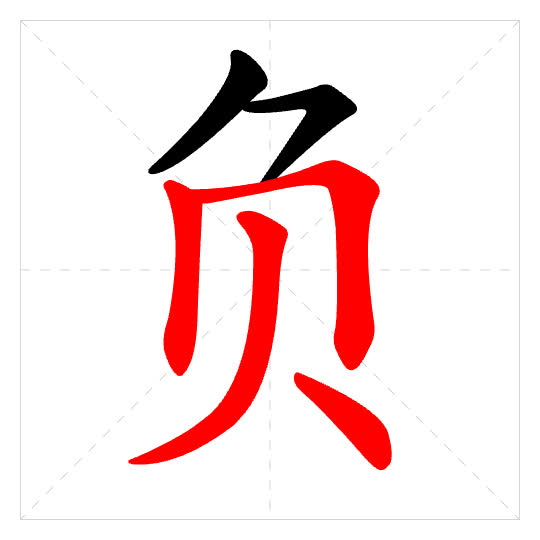
Basic Meaning
v
This is the literal, physical meaning of the character, often seen in classical idioms like 负荆请罪. In modern usage, it is often used metaphorically for burdens or responsibilities (sense 2).
to carry on the back
背。
Words:
负重负荆请罪负荆负重致远负重涉远
Synonyms:
Sentences:
- 在古代,士兵有时需要负重行军。In ancient times, soldiers sometimes had to carry heavy loads while marching.
- 他主动负起了照顾家人的责任。He proactively took on the responsibility of caring for his family.
v
Used metaphorically to describe carrying a duty or burden. Often paired with words like 责任 (responsibility), 重任 (heavy task).
to take on (a responsibility); to shoulder (a burden)
担任。
Words:
忍辱负重肩负负责任身负重任担负
Sentences:
- 作为经理,他肩负着带领团队成功的重任。As the manager, he shoulders the heavy responsibility of leading the team to success.
- 每个人都应该对自己的行为负责任。Everyone should be responsible for their own actions.
v
Often used in contexts of stubborn defense or resistance, as in 负隅顽抗 (to stubbornly resist relying on a stronghold). It can also mean 'to be conceited' in 自负.
to rely on; to depend on (often in a defiant or stubborn context)
仗恃,倚靠。
Words:
负险固守负隅顽抗负隅负山面海自负
Synonyms:
Sentences:
- 歹徒负隅顽抗,最终还是被警察抓获了。The criminal stubbornly resisted, but was eventually captured by the police.
- 他太自负了,听不进别人的意见。He is too conceited and won't listen to others' opinions.
v
Describes experiencing something negative or harmful, most commonly 'to be wounded' (负伤).
to suffer; to sustain
遭受;受。
Words:
负伤负屈负屈衔冤负屈含冤
Synonyms:
Sentences:
- 他在比赛中负伤,不得不退出。He sustained an injury during the competition and had to withdraw.
v
Specifically used for possessing a reputation or fame, as in 久负盛名 (long enjoying a great reputation).
to have; to enjoy (a reputation)
具有;享有。
Words:
久负盛名素负盛名久负盛誉负有名望不负盛名
Sentences:
- 这家餐厅久负盛名,果然很好吃。This restaurant has long enjoyed a great reputation, and it's indeed delicious.
v
Specifically related to financial debt, as in 负债 (to be in debt).
to owe (money)
亏欠;拖欠。
Words:
负债负债累累偿负贷负逋负
Synonyms:
欠输
Antonyms:
Sentences:
- 他因为投资失败,现在负债累累。Due to failed investments, he is now deeply in debt.
v
Used for breaking commitments, betraying trust, or failing to meet expectations, as in 辜负 (to let down), 负约 (to break a promise).
to betray; to break (a promise); to let down
背弃;辜负。
Words:
辜负负约负义忘恩负义负心
Synonyms:
辜违
Sentences:
- 他辜负了父母的期望,没有考上大学。He disappointed his parents' expectations by not getting into university.
- 他负约了,没有按时完成项目。He broke his promise and didn't finish the project on time.
v
Used for the outcome of games, battles, or contests, opposite of 胜 (to win).
to lose (in a competition); to be defeated
失败(跟“胜”相对)
Words:
不分胜负胜负负于客队负于对方堕负
Synonyms:
败
Antonyms:
Sentences:
- 比赛胜负不重要,重要的是享受过程。Winning or losing the game isn't important; what's important is enjoying the process.
- 我们的球队昨天负于对手。Our team lost to the opponent yesterday.
adj
A mathematical term. It functions as an attribute or prefix, as in 负数 (negative number).
(attribute) less than zero; negative
属性词。小于零的(跟“正”相对)。
Words:
负数负项负号
Antonyms:
Sentences:
- -5 是一个负数-5 is a negative number.
adj
A scientific/physics term, indicating a negative charge. It functions as an attribute or prefix, as in 负电 (negative electricity).
(attribute) (electricity) negative
属性词。物理学上指带有或得到电子的(跟“正”相对)。
Words:
负电负极负面
Antonyms:
Sentences:
- 电池的负极通常标有符号“The negative terminal of a battery is usually marked with the symbol "-".
Writing & Component
Radical贝
Structuretop_bottom
Stroke Count6
Strokes丿㇇丨𠃍丿丶