
放放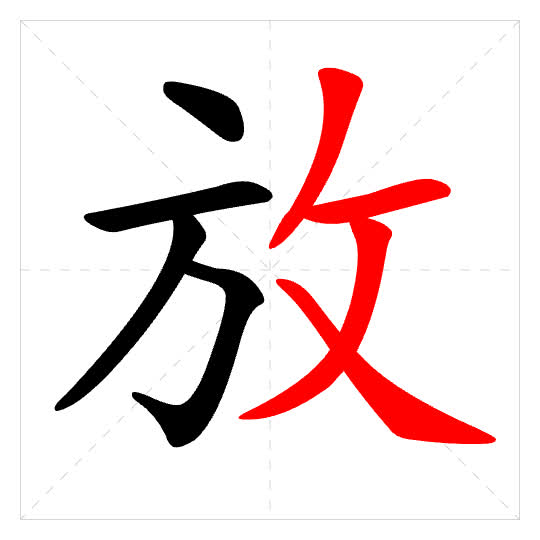
Basic Meaning
v
Often used with abstract concepts like 放手 (let go of worries), 放行 (allow to pass).
to release; to let go; to set free
解除约束,得到自由。
Words:
流放放逐放开释放放行
Antonyms:
Sentences:
- 请放开我的手。Please let go of my hand.
- 海关检查后,我们就放行了。After the customs inspection, they let us pass.
v
Commonly appears in 放学 (finish school), 放假 (have a holiday).
to finish (work or school) and return home to rest
一段时间的工作或学习结束,回家休息。
Sentences:
- 孩子们下午三点放学。The children finish school at 3 PM.
- 我们公司明天开始放暑假。Our company starts summer vacation tomorrow.
v
Often used in set phrases or has a slightly negative connotation of being uncontrolled, e.g., 放肆 (unbridled).
to behave freely and without restraint; to let oneself go
任意,随便。
Words:
放任放声高歌放纵放肆放言高论
Sentences:
- 父母不应该对孩子太放任。Parents shouldn't be too permissive with their children.
v
Primarily used with animals like 牛, 羊.
to put (livestock) out to pasture
让牛羊等在草地上吃草和活动。
Words:
放牧放牛放羊
Sentences:
- 爷爷每天下午去山坡上放羊。Grandpa takes the sheep out to pasture on the hillside every afternoon.
v
Used in historical or formal contexts.
to exile; to banish
流放,旧时把人驱逐到边远的地方去。
Words:
放逐流放
Sentences:
- 在古代,皇帝常把犯人流放到边疆。In ancient times, emperors often exiled criminals to the frontier.
v
Can refer to physical emissions (light, sound) or launching objects (放风筝).
to emit; to send out; to launch
发出;散发。
Words:
放枪放光放冷箭放电放风筝
Synonyms:
Sentences:
- 周末我们一起去公园放风筝吧。Let's go fly kites together in the park this weekend.
- 这个灯会放柔和的光。This lamp emits a soft light.
v
Specific to igniting things, often for celebration (firecrackers) or destruction.
to set off (fireworks); to light a fire
点燃;引火烧。
Words:
放炮放火放爆竹放鞭炮
Sentences:
- 过年的时候,孩子们喜欢放鞭炮。During Chinese New Year, children like to set off firecrackers.
v
Often used in financial contexts like 放贷.
to lend (money) for interest
为取利息,将钱借给别人。
Words:
放债放款放贷放帐
Sentences:
- 过去有些富人会向穷人放债。In the past, some wealthy people would lend money at interest to the poor.
v
Common in phrases like 放大 (enlarge), 放宽 (relax restrictions).
to expand; to enlarge; to develop
扩大,发展。
Words:
放大放宽放拓放源节流放展
Synonyms:
扩
Sentences:
- 你能把这张照片放大吗?Can you enlarge this photo?
- 政府放宽了入境政策。The government has relaxed its border entry policy.
v
Used with media. 播放 is more common for 'to play'.
to broadcast; to play (audio/video); to show (a film)
播送;放映。
Words:
放映放录音放音乐放电影
Synonyms:
映播
Sentences:
- 今晚电影院放什么电影?What movie is playing at the cinema tonight?
- 我喜欢一边工作一边放音乐。I like to play music while I work.
v
A very common and general meaning. More casual than 放置.
to place; to put
将东西摆在一定的地方。
Words:
放置存放摆放
Synonyms:
置搁
Sentences:
- 请把你的书包放在椅子上。Please put your schoolbag on the chair.
- 重要文件要存放在保险柜里。Important documents should be placed in a safe.
v
Used poetically. Common in 开放 (to bloom; also 'to open up').
to blossom; to bloom
花开。
Words:
怒放百花齐放绽放开放含苞待放
Synonyms:
Sentences:
- 这种植物在夜间会绽放出美丽的花朵。This plant blooms with beautiful flowers at night.
v
Similar to 'to shelve' or 'to postpone mentally'.
to put aside for now; to leave (something) aside
搁置。
Sentences:
- 这个难题我们先放一放,明天再讨论。Let's put this difficult problem aside for now and discuss it again tomorrow.
v
Extremely common in cooking or mixing contexts, e.g., 放盐 (add salt).
to add in; to put in
加进去某东西。
Words:
放点儿盐放糖放水放牛奶放水果
Synonyms:
Sentences:
- 汤里应该放点儿盐吗?Should I add some salt to the soup?
- 我喜欢在咖啡里放牛奶。I like to put milk in my coffee.
v
Often used in formal, relief, or organizational contexts.
to distribute (money or supplies) to those in need
把钱或物资发给(需要的人)。
Words:
放赈发放放粮
Synonyms:
Sentences:
- 地震后,政府向灾民发放了救援物资。After the earthquake, the government distributed relief supplies to the victims.
v
Used as a warning or exhortation, e.g., 放聪明点 (you'd better be smart about this).
to make oneself act in a certain way; to adopt an attitude
控制自己的行动,采取某种态度,达到某种分寸。
Words:
放明白些放稳重些
Sentences:
- 你最好放聪明点,别再惹麻烦了。You'd better wise up and not cause any more trouble.
v
Similar to sense 13 but implies a more permanent or emotional abandonment.
to give up; to discard; to forget about
丢开。
Sentences:
- 过去的伤心事,就放下吧。Just let go of those sad things from the past.
Writing & Component
Radical攵
Structureleft_right
Stroke Count8
Strokes丶一𠃌丿丿一丿㇏