
有有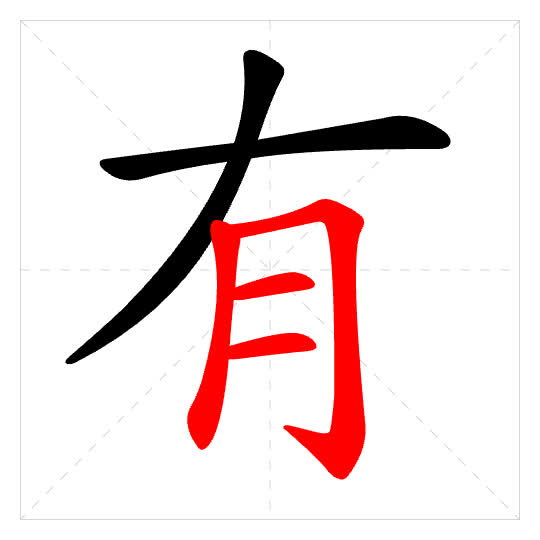
Basic Meaning
v
to have; to possess (opposite of 'not having').
表示拥有或具有(跟“无、没”相对)。
Words:
有学问有钱有罪拥有
Antonyms:
无没
Sentences:
- 我的朋友很有钱。My friend is very wealthy (has a lot of money).
- 他很有学问,读了很多书。He is very knowledgeable (has much learning); he has read many books.
v
to exist; there is. (1) The entity that exists may be placed after or before '有'. (2) '有' can precede indefinite or generalized references. (3) '有 + person/time/place' forms a phrase indicating 'some' of something. (4) Used as a response.
存在。①“有”后面为存在的主体,有时可提到“有”前(跟“无”“没”相对)。②“有”后为不定指词语,组成泛指词语。③“有”后面为“人、时候、地方”,整个组合连用,表事物的一部分。④用作应答语。
Words:
有一天有人
Antonyms:
无没
Sentences:
- 教室里有学生吗?Are there any students in the classroom?
- 有人给你打电话。Someone called you.
- 老师点名时,他大声说“有!”When the teacher took attendance, he said "Here!" loudly.
v
to reach a certain amount or degree (opposite of 'not having').
表示事物达到某个数量或某种程度(跟“无”“没”相对)。
Antonyms:
无没
Sentences:
- 这条河有十米宽。This river is ten meters wide (reaches ten meters in width).
v
to indicate a large quantity, size, or deep degree.
表示有关事物量多量大或程度深。
Antonyms:
无没
Sentences:
- 他对中国历史很有研究。He has done extensive research on Chinese history.
v
to indicate the occurrence or appearance of something.
表示发生或出现。
Sentences:
- 最近,他的中文有了很大进步。Recently, his Chinese has shown great progress (progress has occurred).
part
常见于正式或客套用语,如 有请 (please come in),有劳 (sorry to trouble you)。
Used as a polite prefix before certain verbs to form set polite expressions.
用在某些动词的前面组成套语,表示客气。
Words:
有劳有请有赖有待有如
Sentences:
- 我们将军有请您。Our general invites you.
- 有劳您帮我拿一下行李。Sorry to trouble you to help me carry the luggage.
v
Used before '人' (person), '时候' (time), '地方' (place) to indicate 'some'.
用在“人”“时候”“地方”前面,表示一部分。
Sentences:
- 有人喜欢吃辣的,有人不喜欢。Some people like spicy food, some don't.
- 有时候,我想一个人静一静。Sometimes, I want to be alone and quiet.
v
Used like 'some' or 'certain' for general reference.
泛指,跟“某”的作用相近。
Synonyms:
Sentences:
- 有一天,我希望能去月球看看。One day/Someday, I hope I can go to the moon to take a look.
- 有本书上说这个方法很有效。A certain book says this method is very effective.
Writing & Component
Radical月
Structuretop_bottom
Stroke Count6
Strokes一丿丨𠃌一一