
占占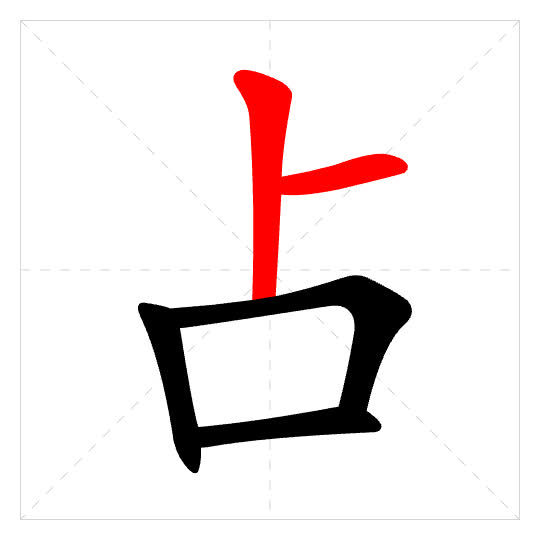
Basic Meaning
v
Often used for taking over space or a position by any means, not necessarily with force.
to occupy; to take hold of
占据。
Words:
占据占领霸占攻占强占侵占
Synonyms:
据夺
Sentences:
- 请不要用包占座位。Please don't occupy a seat with your bag.
- 他的工作占据了大部分时间。His work occupies most of his time.
v
Commonly used with abstract concepts like advantage, majority, or proportion.
to constitute (a certain part); to be in (a certain position or condition)
处在某一种地位或属于某一种情形。
Words:
占优势占上风占多数占便宜占鳌头
Synonyms:
Sentences:
- 在这个项目中,年轻人占了多数。Young people constitute the majority in this project.
- 主场作战让我们的球队占了优势。Playing at home gives our team the advantage.
v
The action usually involves coercion, aggression, or military force. Note the overlap with sense 1; this sense specifically emphasizes the use of force.
to seize (land, a place, etc.) by force
用强力取得(土地、场所等)。
Words:
霸占独占攻占抢占强占
Sentences:
- 军队占领了一座城市。The army seized a city.
- 他们强占了邻居的土地。They forcibly seized their neighbor's land.
Writing & Component
Radical卜
Structuretop_bottom
Stroke Count5
Strokes丨一丨𠃍一