
意意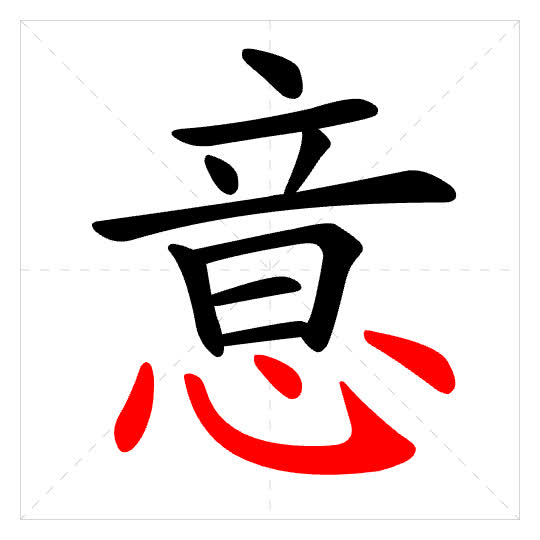
Basic Meaning
n
Often used in fixed phrases expressing a person's intention or desire. Common in words like 中意 (to like), 好意 (goodwill), 满意 (satisfied).
wish; intention; will
心愿;意向。
Words:
Sentences:
- 谢谢你的好意,我心领了。Thank you for your goodwill, I appreciate it.
- 我买的房子很中意。I really like the house I bought.
n
Refers to the meaning of words, concepts, or the thought one is trying to express. Key in phrases like 同意 (to agree) and 词不达意 (words fail to convey the meaning).
meaning; thought; idea
意思,心思。
Sentences:
- 你能同意我的意见吗?Can you agree with my opinion?
- 这首诗的意义很深。The meaning of this poem is very profound.
v
Used as a verb, often in fixed patterns like 意料, 意外 (unexpected). Implies an assumption or expectation about something.
to anticipate; to expect
意料;料想。
Words:
Sentences:
- 比赛的结果出乎意料。The result of the game was unexpected.
- 我没想到会下雨,这真是意外。I didn't expect it to rain; this is really a surprise.
n
Refers to broader ideas, concepts, or intellectual thought. Central to words like 创意 (creativity), 意见 (opinion), 民意 (public opinion).
thought; idea; concept
思想;想法。
Words:
Sentences:
- 他的设计很有新意。His design is very original.
- 大家对这个问题有什么意见?What opinions does everyone have on this issue?
n
Specifically refers to emotional feelings or affection between people. Common in 情意 (tender feelings), 盛意 (great kindness).
feeling; affection; sentiment
感情。
Words:
情意盛意
Sentences:
- 朋友之间应该互相关心,讲究情意。Friends should care for each other and value mutual affection.
n
Refers to a sense of interest, aesthetic charm, or mood. Often seen in descriptive or poetic contexts like 春意 (feeling of spring), 意味 (significance).
interest; charm; flavor
情趣。
Words:
意趣意味春意春意盎然春意阑珊
Sentences:
- 公园里充满了春意。The park is full of the feeling of spring.
- 这幅画很有意味。This painting has a lot of charm/significance.
Writing & Component
Radical心
Structuretop_bottom
Stroke Count13
Strokes丶一丶丿一丨𠃍一一丶㇂丶丶