
心心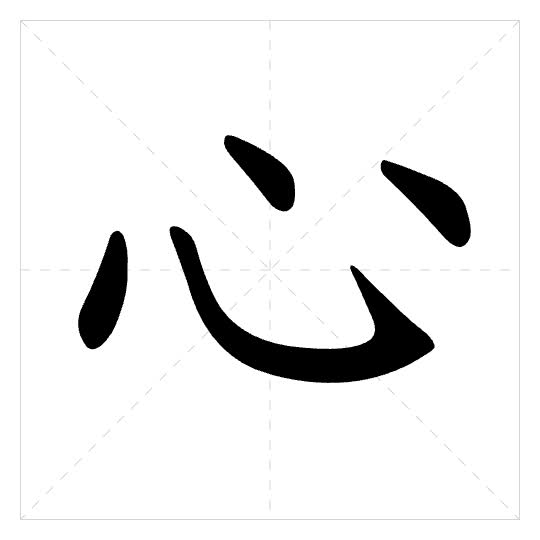
Basic Meaning
n
This is the physical, anatomical meaning. Common medical/biological terms include 心肌, 心脏.
The heart; the organ responsible for pumping blood through the circulatory system in humans and higher animals.
人和高等动物身体内推动血液循环的器官。人的心在胸腔的中部,稍偏左方,呈圆锥形,大小约跟本人的拳头相等,内部有四个空腔,上部两个是心房,下部两个是心室。心房和心室的舒张和收缩推动血液循环全身。也叫心脏。
Words:
心肌心音心悸心脏
Sentences:
- 他的心脏很健康。His heart is very healthy.
- 医生用听诊器检查了他的心音。The doctor checked his heart sounds with a stethoscope.
n
This is the abstract, metaphorical meaning. It's used in countless psychological and emotional expressions like 心思, 用心.
The mind; the heart (as the center of thought, emotion, and intention).
习惯上也指思想器官和思想感情等。
Words:
挖空心思一心一意心思心得用心
Sentences:
- 请你用心听老师讲课。Please listen to the teacher's lecture attentively (with your mind/heart).
- 我一心一意想学好中文。I wholeheartedly want to learn Chinese well.
n
Often refers to the physical center (e.g., 圆心) or the figurative core/essence (e.g., 核心).
Center; core; the middle or most important part of something.
中央,在中间的地位或部分。
Words:
江心圆心重心核心掌心
Sentences:
- 湖心有一个小岛。There is a small island in the center of the lake.
- 团队的成功,团结是核心。For a team's success, unity is the core.
Writing & Component
Radical心
Structuresingle
Stroke Count4
Strokes丶㇂丶丶