
兴兴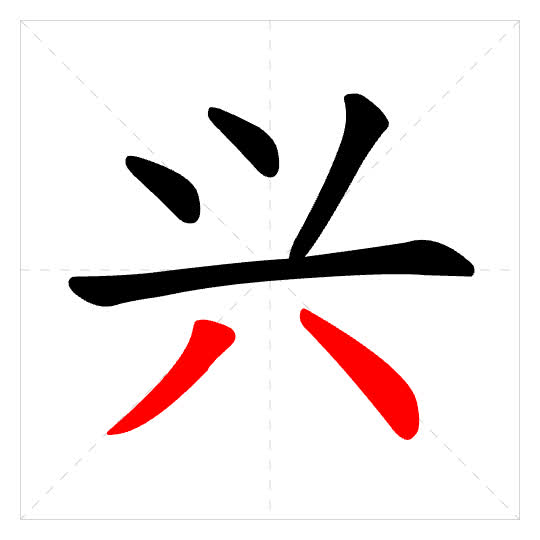
Basic Meaning
v
Often used for social trends, clothing styles, etc.
to be popular, to be in fashion, to be prevalent
流行,盛行。
Words:
时兴复兴新兴兴起不兴
Synonyms:
行盛
Antonyms:
废衰
Sentences:
- 现在这种款式已经不兴了。This style is no longer in fashion nowadays.
- 这种健康饮食的潮流正在城市里兴起。This healthy eating trend is becoming popular in the city.
v
Usually implies a deliberate, large-scale effort or project.
to make prosperous; to make prevalent, to promote
使兴旺;使盛行。
Words:
大兴兴国安邦大兴土木
Synonyms:
旺盛
Antonyms:
衰
Sentences:
- 这个地区在大力发展旅游业,大兴基础设施建This region is vigorously developing tourism and massively promoting infrastructure construction.
v
Commonly used for initiating projects, construction, businesses, or social movements.
to start; to launch; to initiate; to found
开始;发动;创立。
Words:
兴工兴利除弊兴修水利兴办百废待兴
Sentences:
- 公司计划明年兴办一所新的研发中心。The company plans to establish a new R&D center next year.
- 政府决定兴修几座水库来解决水资源问题。The government decided to start constructing several reservoirs to address the water resource issue.
adv
Dialectal usage. Often paired with "许" as in 兴许. Functionally an adverb.
perhaps, maybe
〈方〉副词,或许。
Words:
兴许
Sentences:
- 兴许明天会下雨,你最好带把伞。Perhaps it will rain tomorrow; you'd better bring an umbrella.
adj
Adjective, often used to describe businesses, nations, or periods. The opposite is "衰".
prosperous; thriving; flourishing
旺盛(跟“衰”相对)。
Words:
兴盛兴旺兴隆兴衰兴亡
Synonyms:
旺盛
Antonyms:
Sentences:
- 这条街的生意一直很兴旺。Business on this street has always been thriving.
- 国家正处于一个兴盛的时期。The country is in a period of prosperity.
Writing & Component
Radical八
Structuretop_bottom
Stroke Count6
Strokes丶丶丿一丿丶