
愿愿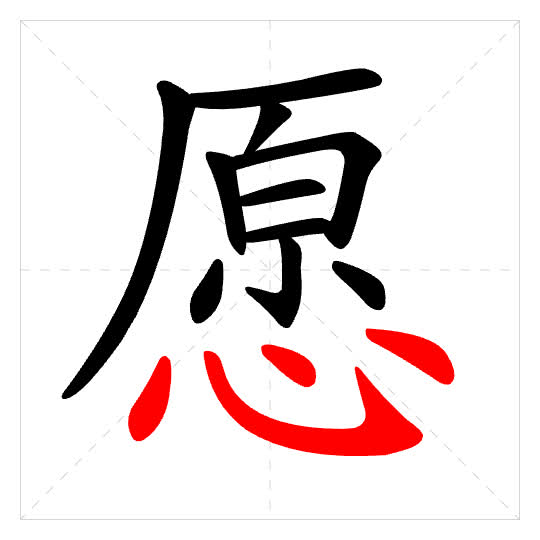
Basic Meaning
v
Commonly used in its disyllabic form 愿意. Can be used before a verb or in a comparative structure (e.g., "我愿……, 也不愿……"/"我宁願……, 也不願……").
to be willing (to do something); to be happy to
乐意,因符合自己的心思而同意。
Words:
Sentences:
- 我愿帮你解决这个问题。I am willing to help you solve this problem.
- 为了家人,他甘愿辛苦工作。For his family, he is willing to work hard.
- 我宁愿走路,也不愿挤公交车。I would rather walk than squeeze onto the bus.
n
wish; hope; desire
希望。
Words:
Sentences:
- 祝你美梦成真,心愿得偿。I wish your dreams come true and your desires are fulfilled.
- 我的愿望是环游世界。My wish is to travel around the world.
n
Primarily used in the context of traditional or folk religion. The common collocations are 许愿 (to make a vow) and 还愿 (to fulfill a vow).
vow (made to a deity); pledge (for divine favor)
迷信的人祈求神佛保佑时许下的酬谢。
Words:
许愿还愿愿心封官还愿许愿还酬
Sentences:
- 她去庙里许愿,请神佛保佑。She went to the temple to make a vow, asking the gods and buddhas for protection.
Writing & Component
Radical心
Structuresemi_enclosed
Stroke Count14
Strokes一丿丿丨𠃍一一亅丿丶丶㇂丶丶