
给给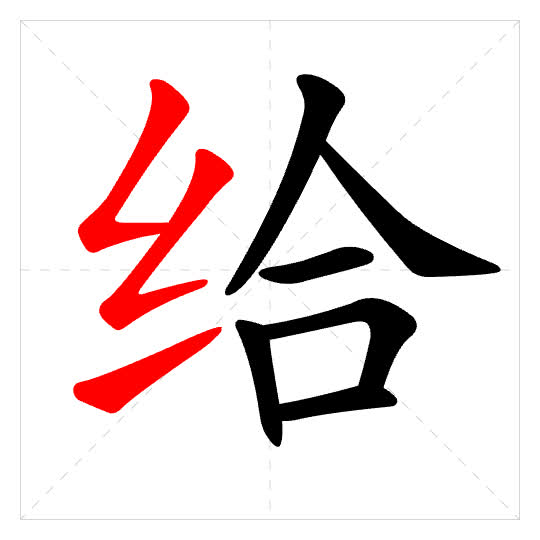
Basic Meaning
v
to give; to hand over; to bestow; to deliver
交付,送与。把动作或态度加到对方。
Words:
Synonyms:
Sentences:
- 他送给我一份生日礼物。He gave me a birthday present.
- 你能分给弟弟一些饼干吗?Can you give some cookies to your little brother?
prep
Used to indicate the beneficiary of an action. Often used in the structure 给 + someone + verb.
for; on behalf of
为(wèi),替。
Synonyms:
替为
Sentences:
- 妈妈给我买了一本新书。Mom bought a new book for me.
- 请你给我拿一杯水。Please get a glass of water for me.
prep
by; (indicating passive voice)
被,表示某种遭遇。
Synonyms:
Sentences:
- 我的自行车给人偷走了。My bicycle was stolen by someone.
- 窗户给风吹开了。The window was blown open by the wind.
prep
Introduces the object of an action, similar to 向.
to; towards
引进动作的对象,跟“向”相同。
Synonyms:
Sentences:
- 小朋友给老师行礼。The children bow to their teacher.
- 他给大家鞠了一躬。He bowed to everyone.
part
This 给 adds emphasis and is often optional in spoken language. It appears in sentences with words like 被, 把, or 叫.
(structural particle) used before a verb to emphasize passive or disposal constructions
用在表示被动、处置等意思的句子的谓语动词前面,以加强语气。
Sentences:
- 房间被他给收拾得干干净净。The room was cleaned up perfectly by him.
- 我把那件事给忘了。I forgot about that matter.
prep
Common in direct commands. Often placed directly before the main verb.
(imperative particle) used to add force to a command or request
用于祈使句,加强祈使语气。
Sentences:
- 给我安静一点!Be quiet!
v
to let; to allow; to make (someone do something)
表示使对方做某件事或容许对方做某种动作,相当于“让,叫”。
Words:
给我给他给大家
Sentences:
- 他给我讲了一个有趣的故事。He told me an interesting story.
- 别给他看这张照片。Don't let him see this photo.
prep
Often used with verbs that involve an impact on someone (e.g., telling, explaining, singing). The meaning is similar to sense 2 and 4 but emphasizes the person being acted upon.
to; for (introducing the recipient or affected party of an action)
引进动作的受害者。
Sentences:
- 请给大家介绍一下新同学。Please introduce the new classmates to everyone.
- 我把刀子给他弄丢了I let him lose the knife.
Writing & Component
Radical纟
Structureleft_right
Stroke Count9
Strokes𠃋𠃋㇀丿㇏一丨𠃍一