
使使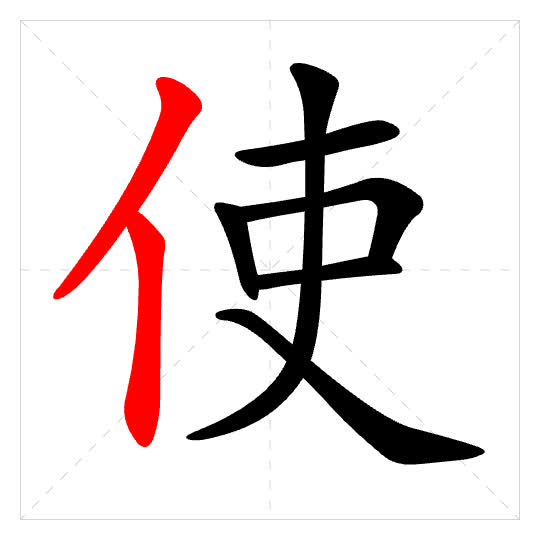
Basic Meaning
v
This sense often implies ordering or dispatching someone, which can carry a sense of authority or command. 使唤 is a common colloquial compound.
to send (on an errand); to order (someone to do something).
派遣;支使。
Words:
使唤支使指使鬼使神差差使
Synonyms:
遣派
Sentences:
- 别随便使唤别人,自己的事情自己做Don't order others around casually; do your own things yourself.
- 他支使助手去买咖啡。He sent his assistant to buy coffee.
v
Common in compounds like 使用 (to use) or 使劲 (to exert strength). It expresses the act of utilizing something.
to use; to employ.
用。
Words:
Synonyms:
Sentences:
- 这把剪刀不好使,有点钝了。These scissors don't work well; they're a bit dull.
- 请正确使用这个设备。Please use this equipment correctly.
v
Grammatical note: In this causative sense, 使 must be followed by an object (the person/thing being caused) and then a verbal phrase describing the resulting action. It forms a pivotal construction (兼语句), e.g., 使 + [Person A] + [Verb Phrase].
to cause; to make; to have (someone do something).
致使;让;叫(必带兼语)。
Words:
致使务使促使迫使
Sentences:
- 这个好消息使他非常高兴。This good news made him very happy.
- 你能使我明白这个道理吗?Can you make me understand this reasoning?
conj
This is a classical/literary conjunction, similar to 如果 or 假如 in modern Chinese. Used in formal writing or fixed expressions like 即使 (even if).
<literary> if; supposing.
〈书〉假使;假如。
Words:
假使即使纵使
Sentences:
- 纵使有再多困难,我们也要完成目标。Even if there are more difficulties, we must still achieve our goal.
n
Refers specifically to a person sent with a mission, especially in diplomatic contexts like 大使 (ambassador).
envoy; emissary; person on a diplomatic mission.
奉使命办事的人。
Words:
使节大使公使特使学使
Sentences:
- 中国大使出席了本次会议。The Chinese ambassador attended this meeting.
v
Specifically means to be dispatched abroad on official business. The verb form related to sense 5.
to serve as an envoy to a foreign country.
派往国外办事。
Words:
出使使者
Sentences:
- 他年轻时就曾出使欧洲。He served as an envoy to Europe when he was young.
n
This sense is historical and not used in modern contexts except when referring to historical titles like 节度使.
<historical> an official in charge of a specific governmental duty (in imperial China).
旧时指负责某种政务的官员。
Words:
转运使节度使
Sentences:
- 在唐代,节度使的权力很大。In the Tang Dynasty, the military governor (节度使) held great power.
Writing & Component
Radical亻
Structureleft_right
Stroke Count8
Strokes丿丨一丨𠃍一丿㇏