
造造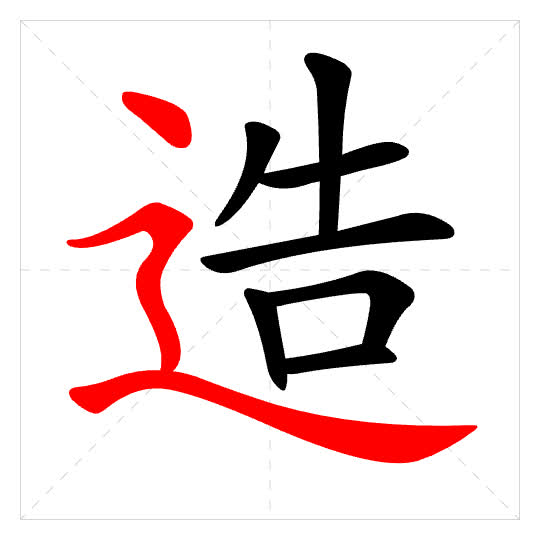
Basic Meaning
v
A common verb for creating tangible objects (like 造船) or intangible things (like 造名册).
to make; to manufacture; to build
制作,做。
Words:
创造建造造船造纸造名册
Sentences:
- 这家公司主要建造高层住宅。This company mainly builds high-rise residential buildings.
v
This sense carries a negative connotation, implying deception, as in 造谣 or 捏造.
to fabricate; to forge; to invent falsehoods
弄虚作假;胡编。
Words:
造谣捏造臆造编造造谣惑众
Synonyms:
编捏臆
Sentences:
- 有人编造了关于他的谣言。Someone fabricated rumors about him.
- 历史学家警告不要捏造证据。Historians warn against forging evidence.
v
This usage is dialectal and informal. It often describes wasteful or excessive behavior.
to indulge in (eating/drinking); to spend extravagantly
〈方〉无节制地吃喝或花用(钱物)。
Sentences:
- 周末他出去大造一顿,吃了很多海鲜。He went out over the weekend and indulged himself, eating a lot of seafood.
v
This sense is literary or formal. It's often used in polite or respectful contexts, such as 造访.
to go to; to visit; to arrive at
〈书〉前往;到达。
Words:
造府造访登峰造极登门造访
Sentences:
- 我们计划下个月造访那所著名的博物馆。We plan to visit that famous museum next month.
- 登门造访前请先打个电话。Please make a phone call before visiting someone's home.
n
A formal or literary noun, most commonly seen in the word 造诣.
level of attainment; achievement (in learning or skill)
〈书〉(学业、技艺等)达到的程度;成就。
Words:
造诣
Synonyms:
诣
Sentences:
- 他在书法方面有很高的造诣。He has a very high level of attainment in calligraphy.
v
A formal sense related to developing talent or capability, as in 造就人才.
to cultivate; to train; to nurture (a person's ability)
〈书〉培养。
Words:
深造可造之才造就
Synonyms:
培养
Sentences:
- 大学的目标是造就对社会有用的人才。The goal of the university is to cultivate talent useful to society.
- 他是一个可造之才,值得好好培养。He is a promising talent worth nurturing.
Writing & Component
Radical辶
Structuresemi_enclosed
Stroke Count10
Strokes丿一丨一丨𠃍一丶㇋㇏