
系系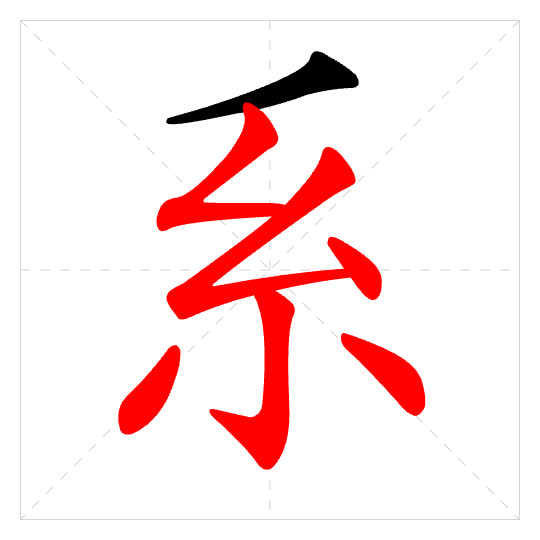
Basic Meaning
n
Often used in compound words to denote a category or network, e.g., 水系 (water system), 语系 (language family).
system; series; group with interconnected relationships
系统,有连属关系的。
Words:
水系语系嫡系派系直系亲属
Sentences:
- 英语属于印欧语系English belongs to the Indo-European language family.
- 这个城市的水系很发达The water system in this city is very developed.
n
Refers to academic departments in higher education institutions, e.g., 中文系 (Chinese Department).
department; faculty (in a university or college)
高等学校中按学科所分的教学行政单位。
Words:
中文系哲学系化学系物理系历史系
Sentences:
- 她在大学里学习中文系She studies in the Chinese Department at university.
- 物理系的学生经常做实验Students in the Physics Department often do experiments.
v
Common in formal or written contexts, e.g., 维系 (to maintain), 联系 (to contact).
to connect; to relate (often used for abstract things)
联结;联系(多用于抽象事物)。
Words:
维系干系联系名誉所系观瞻所系
Synonyms:
联榫
Sentences:
- 我们要维系好家庭关系We need to maintain good family relationships.
- 这个问题与你的工作有直接联系This issue is directly related to your work.
v
Used in formal or legal language to mean 'is' or 'are', e.g., 确系实情 (it is indeed the truth).
to be (in formal or written contexts)
是。
Words:
确系实情确系误伤确系事实
Synonyms:
Antonyms:
Sentences:
- 这份报告确系事实This report is indeed factual.
- 他确系误伤,不是故意的He was indeed accidentally injured, not on purpose.
v
Less common in modern usage; often found in historical or technical contexts.
to hoist or lower by tying up a person or thing
把人或东西捆住往上提或向下送。
Sentences:
- 他从房上把东西系下来。He tied the things down from the roof.
v
Similar to sense 7 but more general for tying or binding, e.g., 系马 (to tie a horse).
to tie; to bind
拴;绑。
Words:
系马系缚系颈榜系搒系
Synonyms:
绑拴
Sentences:
- 农民把马系在树上The farmer tied the horse to a tree.
- 他用绳子系住了包裹He tied up the package with a rope.
Writing & Component
Radical糸
Structuresingle
Stroke Count7
Strokes丿𠃋𠃋丶亅丿丶