
否否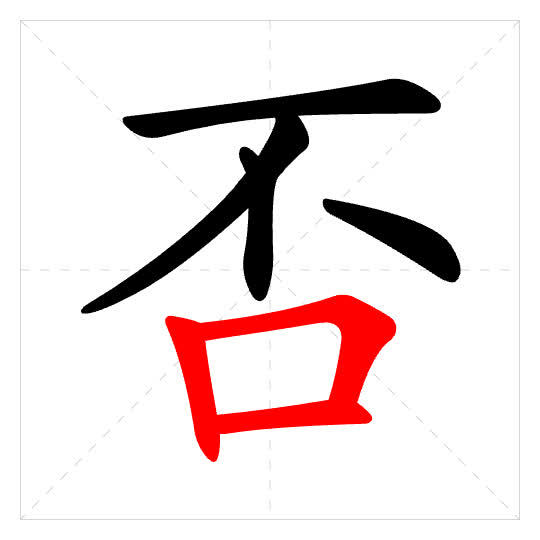
Basic Meaning
adv
Commonly used in formal or written words like 否决 (fou3 jue2) or 否认 (fou3 ren4). Rarely used alone in modern spoken Chinese.
(Used before a verbal element) to negate; not.
用在动作性语素前,表示否定。
Words:
否决否认可否否定是否
Sentences:
- 他断然否定了这个方案。He flatly rejected this proposal.
- 他否认自己知道这件事。He denied knowing about this matter.
adv
This is an archaic or classical usage, rarely used in modern speech except in very formal settings or classical allusions.
(Literary) A negative response adverb, equivalent to 'no'.
〈书〉表示否定,做应答副词,相当于“不”。
Sentences:
- 我问他是否愿意参加比赛,他答否。I asked him if he would like to participate in the competition, and he answered no.
adv
In modern Chinese, 否 in this sense is almost always part of these fixed compound words. The usage meaning is embedded within the compound.
(Used after a verb, adjective, or phrase) to indicate a rhetorical question, often forming words like '是否' (whether or not), '可否' (may or may not).
用在动词、形容词及其短语后,表示反问,常构成“是否、可否、能否”等,表示“是不是、可不可、能不能”。
Words:
是否可否能否
Sentences:
- 你明天是否能来开会?Can you come to the meeting tomorrow? (Literally: Are you able to come to the meeting tomorrow or not?)
- 可否告诉我你的名字?May I ask for your name? (Literally: Is it permissible to tell me your name?)
part
This is a classical Chinese grammatical particle. In modern Chinese, 吗 (ma) serves this function. Knowing this sense helps understand classical texts.
(Literary) Sentence-final interrogative particle.
〈书〉语气助词。用在句尾,表询问。
Sentences:
- 先生知此事否?Does the master know about this matter? (Classical Chinese)
Writing & Component
Radical口
Structuretop_bottom
Stroke Count7
Strokes一丿丨丶丨𠃍一