
新新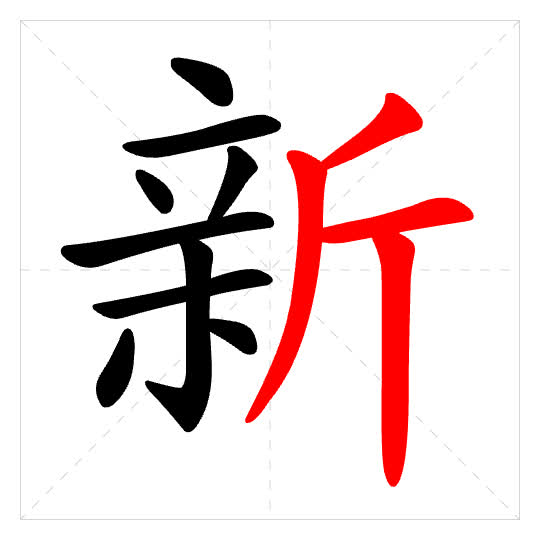
Basic Meaning
adj
new ; opposite of 'old' or 'aged'; a) appearing for the first time; freshly experienced. b) newly made or produced; unused. c) causing a change to be different from before.
跟“旧”“老”相反。①初次出现的;刚体验到的。②刚制作生产出来的;没用过的。③使变成和以往不同的。
Words:
新气象新机器新时代新问题新衣服新社会
Sentences:
- 新年要有新气象。The new year should bring a new atmosphere.
- 他买了一辆新自行车。He bought a new bicycle.
- 我们进入了新时代。We have entered a new era.
v
Used primarily in set compound words or idioms.
to make new; to abolish the old and replace with the new; to renovate.
革除旧的、换上新的;使变成新的。
Words:
耳目一新改过自新革新一新耳目悔过自新
Sentences:
- 公司必须不断革新才能发展。The company must continuously innovate to develop.
- 他决心改过自新。He is determined to reform himself.
n
new person or thing; novelty.
指新的人或事物。
Words:
辞旧迎新推陈出新翻新迎新会尝新
Antonyms:
旧陈
Sentences:
- 辞旧迎新是春节的传统。Bidding farewell to the old and welcoming the new is a Spring Festival tradition.
- 这个设计没什么新意。This design has little novelty.
adv
newly; recently.
副词,新近。
Words:
新近新来新兴新秀近新
Sentences:
- 他是公司新来的员工。He is a newly arrived employee at the company.
adj
newly married.
刚结婚的。
Words:
新娘新郎新女婿新媳妇新房
Sentences:
- 新娘和新郎在拍照。The bride and groom are taking photos.
- 他们刚搬进新房。They just moved into their new marital home.
Writing & Component
Radical斤
Structureleft_right
Stroke Count13
Strokes丶一丶丿一一亅丿丶丿丿一丨