
故故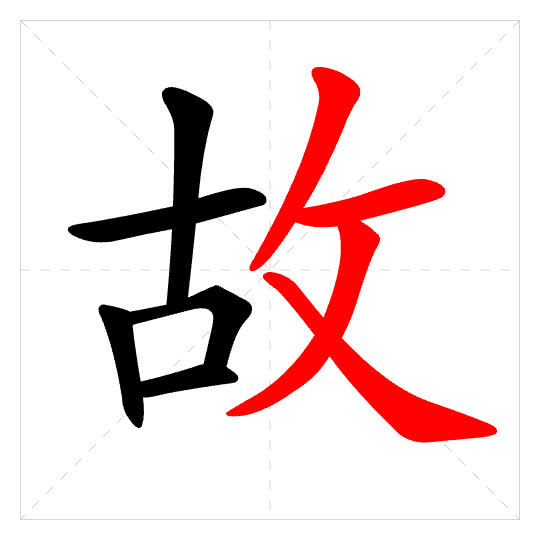
Basic Meaning
n
Often used in formal contexts. Common in set phrases like 无缘无故 (for no reason at all).
reason; cause
缘故,原因。
Words:
无缘无故不知何故借故推辞无故缘故
Sentences:
- 他借故离开了会议室。He found an excuse to leave the meeting room.
- 她今天心情不好,不知何故。She is in a bad mood today, for some unknown reason.
n
Usually refers to negative or unexpected events.
incident; accident; mishap
意外的事情。
Words:
变故事故故障细故乡里多故
Sentences:
- 路上发生了一起交通事故。A traffic accident happened on the road.
- 家里突然发生了变故,他必须马上回去。An unforeseen incident happened at home, so he must return immediately.
adv
An adverb. Often used with verbs expressing negative actions or pretense, e.g., 犯 (to violate), 作 (to pretend).
intentionally; on purpose; deliberately
故意。
Words:
明知故犯故作玄虚故作镇定
Sentences:
- 他明知故犯,又要被老师批评了。He knowingly broke the rules on purpose and will be criticized by the teacher again.
- 他故意把声音放得很低。He deliberately lowered his voice.
adj
An adjective describing things from the past.
former; old; previous
原来的;从前的;旧的。
Words:
温故知新吐故纳新故地故乡故居
Sentences:
- 我又回到了故乡,感觉很亲切。I have returned to my hometown, and it feels very familiar.
- 这栋老房子是他的故居。This old building is his former residence.
n
A noun. Often used in phrases describing relationships.
old friend; acquaintance
老朋友。
Words:
一见如故沾亲带故非亲非故
Sentences:
- 虽然我们是第一次见面,却感觉一见如故。Although it's our first time meeting, we feel like old friends.
- 我们是多年故交,关系非常好。We are old friends of many years and have a very good relationship.
v
A verb or adjective for death. It's a formal and somewhat literary term.
to die (usually of a person); deceased
死;已经死亡。
Words:
故友病故身故
Sentences:
- 他的祖父前年病故了。His grandfather died of illness the year before last.
Writing & Component
Radical攵
Structureleft_right
Stroke Count9
Strokes一丨丨𠃍一丿一丿㇏