
旅旅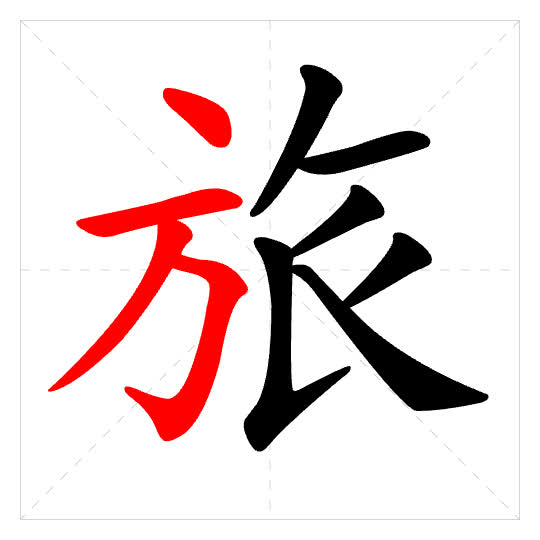
Basic Meaning
v
Commonly used in compounds like 旅行 (lüxíng), 旅游 (lüyóu). It often describes the state of being away from home for a journey.
to travel; to be away from home as a guest.
出行,在外作客。
Sentences:
- 他计划明年去欧洲旅行。He plans to travel to Europe next year.
- 他在海外旅居多年,非常想念家乡。He has lived abroad for many years and misses his hometown very much.
n
This refers to the person traveling. It is a classical or formal word and is mainly seen in compounds like 商旅 (shānglǚ). The modern common word for 'traveler' is 旅客 (lǚkè).
traveler; one who is away from home.
旅行的人;离家在外的人。
Words:
行旅商旅
Sentences:
- 古代,商旅们沿着丝绸之路进行贸易。In ancient times, merchants traveled along the Silk Road for trade.
- 这家客栈主要接待远道而来的行旅。This inn mainly receives travelers who come from afar.
n
A specific term for a military organizational level, smaller than a 师 (shī, division) and larger than a 团 (tuán, regiment) or 营 (yíng, battalion).
brigade (a military unit).
军队的编制单位,通常隶属于师或集团军(军),下辖若干个营(或团)。
Sentences:
- 我父亲曾在陆军某旅担任指挥官。My father once served as a commander in an army brigade.
- 这次演习动用了三个步兵旅。Three infantry brigades were mobilized for this exercise.
n
A literary or formal term for the army. It's often seen in set phrases like 军旅 (jūnlǚ) or 劲旅 (jìnglǚ).
armed forces; the military.
指军队。
Words:
军旅劲旅强兵劲旅军旅之事
Sentences:
- 他的青春大部分献给了军旅生涯。He spent most of his youth in a military career.
Writing & Component
Radical方
Structureleft_right
Stroke Count10
Strokes丶一𠃌丿丿一丿𠄌丿㇏