
族族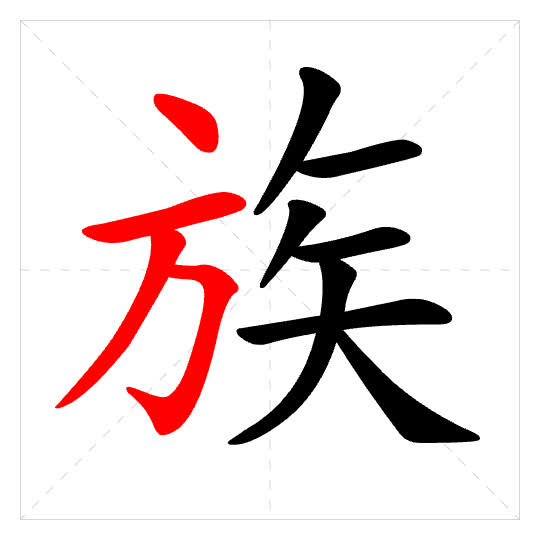
Basic Meaning
n
指同一祖先的后代。常与宗族、族人等词语搭配使用,描述传统的家族关系,区别于现代的家庭。
clan; kin group
聚居而有血统关系的人群的统称。
Words:
宗族同族合族族人族叔
Sentences:
- 我们家族的族人每年都会聚会一次。Our clan members meet once every year.
- 他很尊重他的同族长辈。He respects his elders from the same clan very much.
n
注意区分 民族 和 种族。在中国语境下,“汉族”、“苗族”等常使用 民族。
race; ethnicity; nationality
种族;民族。
Words:
汉族蒙古族白族傣族苗族
Sentences:
- 汉族是中国人口最多的民族。The Han ethnicity is the largest ethnic group in China.
- 苗族有自己的语言和传统服饰。The Miao people have their own language and traditional clothing.
n
用于对事物进行分类,如“水族”、“芳香族”等学术或分类术语。
class; group; category
事物有某种共同属性的一大类;种类。
Words:
水族语族芳香族
Sentences:
- 水族馆里有各种各样的水族动物。There are all kinds of aquatic animals in the aquarium.
- 英语属于印欧语族。English belongs to the Indo-European language family.
n
现代用法,常指具有特定生活方式或特征的群体,如“上班族”。这种用法多用于口语和非正式场合。
group of people
称具有某种共同属性的一类人。
Words:
打工族上班族有车族追星族啃老族
Sentences:
- 大城市里有很多上班族。There are many office workers in big cities.
- 他是一个典型的追星族。He is a typical fan follower.
Writing & Component
Radical方
Structureleft_right
Stroke Count11
Strokes丶一𠃌丿丿一丿一一丿㇏