
别别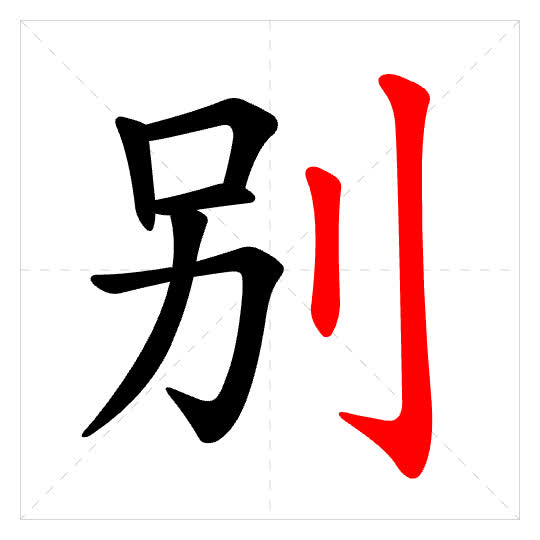
Basic Meaning
v
A verb describing the act of separation or parting. Often used in formal or emotional contexts.
to part; to leave; to bid farewell
分离;离别。
Words:
别离分别告别久别重逢临别赠言
Antonyms:
逢
Sentences:
- 他在机场和家人告别。He said goodbye to his family at the airport.
- 我们毕业分别后,很久没见了。We haven't seen each other for a long time since we parted after graduation.
pron
A pronoun meaning 'other' or 'another'. Common in words like 别人 (other people), 别处 (another place).
other; another; different
指另外的。
Words:
Sentences:
- 这本书很有趣,我推荐你看别的书。This book is very interesting; I recommend you read other books.
- 这个问题我们换个角度想想。Let's think about this problem from another perspective.
v
A verb describing the action of telling things apart. It's the core meaning in words like 辨别 and 鉴别.
to distinguish; to differentiate
区分;区别。
Words:
区别鉴别辨别分门别类识别
Sentences:
- 你能辨别出这两幅画的区别吗?Can you distinguish the difference between these two paintings?
- 他需要学会鉴别信息的真假。He needs to learn to identify whether information is true or false.
n
A noun referring to a difference or distinction between things.
difference; distinction
差别。
Words:
内外有别天壤之别差别天渊之别
Synonyms:
Sentences:
- 这两款手机的价格有天壤之别。There's a world of difference in price between these two phone models.
pron
A pronoun meaning 'category' or 'type'. It forms words denoting classification, like 性别 (gender), 级别 (rank).
category; type; class
类别。
Words:
Sentences:
- 请在表格里填写你的性别。Please fill in your gender on the form.
v
A verb describing the action of attaching or securing one thing to another with a pin, clip, etc.
to pin; to clip; to fasten
固定住;插住;用东西卡住。
Words:
别针别住别卡别扣别棍
Synonyms:
卡插
Sentences:
- 她用别针把文件别在一起。She used a pin to fasten the documents together.
v
A verb used in martial arts or wrestling contexts, meaning to trip someone by hooking their leg.
to trip someone; to hook someone's leg
用腿使绊儿把对方摔倒。
Words:
别腿别倒别绊别摔踢别
Synonyms:
绊
Antonyms:
扶
Sentences:
- 那个选手用巧妙的别腿动作把对手摔倒了。That contestant used a clever leg-hooking move to trip his opponent.
v
A driving-related verb, often with a negative connotation of dangerous or aggressive driving.
to cut off (a vehicle); to force one's way in front of another car
两辆车朝同一方向行驶时,一辆车斜着强行驶到另一辆车的前方,使不能正常行进。
Words:
别车别道别行
Synonyms:
插挤
Antonyms:
让避
Sentences:
- 开车时随意别车是非常危险的行为。Cutting off other cars recklessly while driving is very dangerous behavior.
adv
An adverb used to give prohibitions or strong advice. Equivalent to 'don't'. Very common in daily speech.
don't; stop; must not
表示禁止或劝阻,跟“不要”的意思相同。
Words:
别动别提别介
Synonyms:
勿
Sentences:
- 外面下雨了,别出去了。It's raining outside, don't go out.
- 别动!我来帮你拿。Don't move! Let me get it for you.
adv
An adverb (usually paired with 是) expressing a worried or negative speculation about something.
could it be that...; I'm afraid that... (expressing an undesirable guess)
表示揣测,通常跟“是”字合用(所揣测的事情,往往是自己所不愿意的)。
Words:
别是
Sentences:
- 他到现在还没来,别是迷路了吧?He hasn't arrived yet, could it be that he's lost?
adj
An adjective describing something special or out of the ordinary.
special; unique; distinctive
特殊;不同一般。
Words:
别致特别
Sentences:
- 她今天的发型很别致。Her hairstyle today is very distinctive.
Writing & Component
Radical刂
Structureleft_right
Stroke Count7
Strokes丨𠃍一𠃌丿丨亅