
起起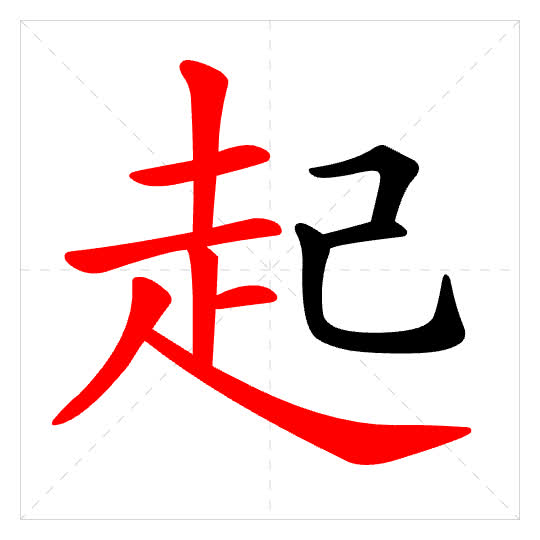
Basic Meaning
v
Often used in compounds like 起来 or 起身. It describes a basic physical movement.
to rise from a lying, sitting, or prone position; to stand up or sit up
由坐卧趴伏而站立或由躺而坐。
Words:
Sentences:
- 早上七点,他准时起床。At 7 AM, he gets up on time.
- 老师一进来,同学们都立刻起立。As soon as the teacher entered, all the students stood up immediately.
v
Often used for the start of a journey or movement, as in 起步 (start walking), 起飞 (take off).
to depart or cause to depart from an original position; to start moving
离开或使离开原来的位置。
Words:
Sentences:
- 飞机马上就要起飞了。The plane is about to take off.
- 我们明天一早起程去上海。We will depart for Shanghai early tomorrow morning.
v
Can describe economic trends, emotions, or physical swelling (e.g., dough rising).
to rise from below; to swell or increase
由下而上升;由小而涨大。
Words:
大起大落一起一落起劲面起了起重
Synonyms:
Antonyms:
Sentences:
- 最近股票的价格大起大落。Recently, stock prices have been fluctuating wildly.
- 面包在烤箱里慢慢起来了。The bread is slowly rising in the oven.
v
Specifically used for skin conditions like blisters or heat rash.
to develop (a blister, bump, rash)
长出(疱、疙瘩、痱子)。
Words:
起泡起燎泡起痱子起水疱儿起疙瘩
Sentences:
- 夏天太热,孩子容易起痱子。In summer, it's too hot, and children easily get heat rash.
- 走路太多,我脚上起了一个水泡。I walked too much and got a blister on my foot.
v
e.g., pulling out a nail, retrieving goods from storage.
to extract or remove something stored or embedded
把收藏或嵌入的东西弄出来。
Words:
起钉子起货起赃起菜
Sentences:
- 我需要一个工具来起这颗钉子。I need a tool to pull out this nail.
- 仓库里的货已经起完了。The goods in the warehouse have already been retrieved.
v
Often used for natural phenomena (起风) or abstract concepts (起疑心).
to occur; to initiate; to cause to happen
发生,发动。
Words:
起风起疑心起作用起疑起意
Synonyms:
Antonyms:
Sentences:
- 外面起风了,把窗户关上吧。The wind is picking up outside; let's close the window.
- 他的行为让我起了疑心。His behavior made me suspicious.
v
Used for preparing documents, names, or plans.
to draft; to draw up
拟定。
Words:
起稿子起草起稿起名
Synonyms:
拟
Sentences:
- 经理让我为会议起一份草稿。The manager asked me to draft a document for the meeting.
- 给孩子起名字是一件重要的事。Naming a child is an important matter.
v
Often used for constructing buildings or starting a business (起家).
to build; to establish
建造,建立。
Words:
白手起家起房子起伙平地起高楼
Sentences:
- 他们打算明年在这里起一栋新楼。They plan to build a new building here next year.
- 他是白手起家的企业家。He is an entrepreneur who started from scratch.
q
Used as a classifier for incidents, cases, or accidents. It is neutral but often used for negative events.
measure word for occurrences (often negative events)
次;件(多用于消极的事)。
Words:
两起盗窃案一起重大事故几起一起事故三起案件
Sentences:
- 这个月发生了三起交通事故。There were three traffic accidents this month.
- 警方正在调查这几起盗窃案。The police are investigating these theft cases.
v
Attached to a verb to indicate the direction of the action is upward, e.g., 拿起 (pick up).
directional verb complement: upward movement
趋向动词。用在动词后。表示向上。
Words:
抬起扶起拿起
Sentences:
- 请把地上的书拿起来。Please pick up the book on the floor.
- 他扶起摔倒的老人。He helped the fallen elderly person up.
v
When used with 得 or 不 after a verb, it expresses whether something is affordable, achievable, or respectable.
potential complement: indicates capability (with 得/不)
趋向动词。用在动词后。常跟“得、不”连用,表示力量条件等够得上或够不上;能力达得到或达不到。
Words:
看不起买得起
Sentences:
- 这件衣服太贵了,我买不起。This piece of clothing is too expensive; I can't afford it.
- 不要看不起任何人。Don't look down on anyone.
v
Often used in compounds like 开始, 起初, 起点.
to begin; start
开始。
Words:
起初起点起讫起止起笔
Sentences:
- 起先,我并不喜欢这里。At first, I didn't like it here.
v
Attached to a verb to show that an action starts and continues, e.g., 唱起歌来 (start singing).
directional verb complement: indicates the start and continuation of an action
趋向动词。用在动词后。表示事物随动作出现并持续。
Words:
唱起响起
Sentences:
- 教室里突然响起了掌声。Applause suddenly broke out in the classroom.
- 他高兴地唱起了歌。He happily started singing.
v
A more abstract usage where 起 introduces the object or person involved, often in phrases like 想起 (think of).
directional verb complement: indicates the action involves someone or something
趋向动词。用在动词后。表示动作涉及人或事。
Sentences:
- 看到这张照片,我想起了我的朋友。Seeing this photo, I thought of my friend.
- 他提起了昨天发生的事情。He brought up what happened yesterday.
v
Used after a verb to mark the beginning of an action, often in questions or narratives about origins.
verb complement: indicates the starting point of an action (used with 从/由)
放在动词后。表示动作的开始,跟“从、由”等配合。
Words:
从何说起
Synonyms:
Antonyms:
Sentences:
- 这个故事要从很久以前说起。This story has to be told starting from a long time ago.
- 我们的话题由美食说起。Our conversation started with food.
Writing & Component
Radical走
Structuresemi_enclosed
Stroke Count10
Strokes一丨一丨一丿㇏𠃍一乚