
古古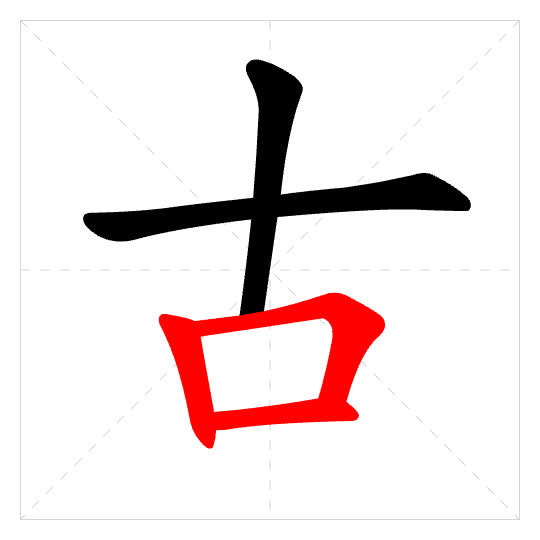
Basic Meaning
adj
This is the core meaning, often used to describe historical periods, events, or things from the distant past.
ancient; of remote antiquity; of the past (as opposed to "the present").
时代久远的,过去的,跟“今”相对。
Words:
太古远古今古奇观古为今用古老
Synonyms:
昔老
Antonyms:
Sentences:
- 这个故事发生在一个古国。This story takes place in an ancient kingdom.
- 他正在研究古代历史。He is researching ancient history.
adj
Focuses on the physical age or long existence of an object or place, not necessarily its historical or cultural value from sense 1.
old; aged; having existed for a long time.
经历年月很久的。
Words:
古画古瓷古墓古城古书
Synonyms:
Antonyms:
Sentences:
- 这座古桥有五百年的历史了。This old bridge has a history of five hundred years.
- 博物馆里展出了很多珍贵的古画。Many precious ancient paintings are exhibited in the museum.
adj
Describes things made in modern times but designed to look or feel like they are from an earlier era.
archaic in style; classic; antique-looking.
具有古代风格的。
Words:
古拙古朴古风古香古色
Sentences:
- 她很喜欢这座建筑的古风设计。She really likes the archaic-style design of this building.
- 这个房间的家具很古拙。The furniture in this room is very simple and antique-looking.
adj
Often used in a positive sense to praise an old-fashioned sincerity or moral quality that is perceived as rare today. The phrase 人心不古 implies that contemporary people lack this quality.
sincere and simple; unaffected and honest (of character or style).
真挚纯朴。
Words:
人心不古不古古道热肠
Sentences:
- 他真是个古道热肠的人,总是帮助别人。He is really a warm-hearted and sincere person, always helping others.
n
Used as a noun, often in compound words related to studying or appreciating the past.
things from ancient times; antiquity.
古代的事物。
Words:
考古怀古食古不化访古
Sentences:
- 他的专业是考古。His major is archaeology.
- 这次旅行是一次访古之旅。This trip is a journey to visit ancient sites.
Writing & Component
Radical口
Structuretop_bottom
Stroke Count5
Strokes一丨丨𠃍一