
设设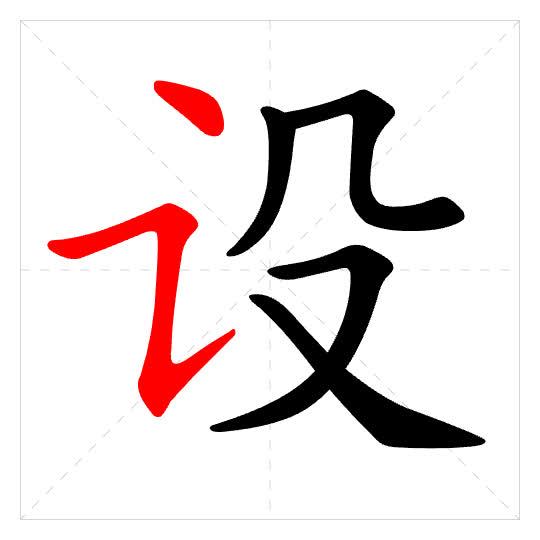
Basic Meaning
v
Often used for arranging physical objects (陈设), a place (设岗), or an event (设宴).
to arrange; to place; to set up
布置,安置。设立。
Words:
陈设安设设宴设岗设防
Sentences:
- 餐厅里陈设着许多古董。Many antiques are arranged in the dining room.
- 公司在门口新设了一个安保岗。The company just set up a new security post at the entrance.
v
Used for establishing organizations, systems, or rules (设立, 建设).
to establish; to found; to create
建立;创办。
Words:
设立建设创设开设设置
Sentences:
- 他们计划明年在这里设立一个分公司。They plan to establish a branch office here next year.
- 学校开设了一门新的编程课程。The school has launched a new programming course.
v
Focuses on the process of planning and devising methods (设计, 设法).
to plan; to make plans
筹划。
Words:
设计想方设法设法
Sentences:
- 我们必须设法解决交通拥堵的问题。We must find a way to solve the traffic congestion problem.
v
Used for hypothetical reasoning or considering a situation from another's perspective (设想, 设身处地).
to assume; to suppose
假定。
Words:
设身处地不堪设想设想
Sentences:
- 请你设想一下,如果你中了一百万彩票会做什么。Please imagine what you would do if you won a million-dollar lottery.
- 你能设身处地为别人考虑一下吗?Can you put yourself in someone else's shoes and think about it?
Writing & Component
Radical讠
Structureleft_right
Stroke Count6
Strokes丶㇊丿㇍㇇㇏