
没没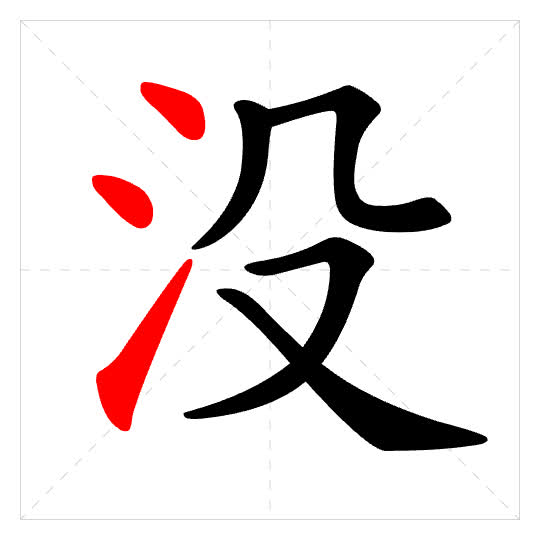
Basic Meaning
v
Commonly used as a verb to negate possession or existence. It is more colloquial than 没有, but often interchangeable in spoken language.
not have; there is not; to lack
没有。
Words:
Synonyms:
无
Antonyms:
Sentences:
- 我没钱了,得去取点现金。I don't have any money left; I need to withdraw some cash.
- 他没时间参加明天的会议。He doesn't have time to attend tomorrow's meeting.
- 这个房间没窗户,感觉有点闷。This room has no windows; it feels a bit stuffy.
adv
Used as an adverb to negate that something has happened or a state has changed. Often paired with 还 to mean 'not yet'.
not yet; never (indicating negation of a past action or change of state)
表示“已然”的否定,表示“曾经”的否定。
Words:
还没从没
Synonyms:
未莫勿毋
Sentences:
- 电影还没开始,我们来得正好。The movie hasn't started yet; we came just in time.
- 我从没见过这么美的日落。I have never seen such a beautiful sunset.
adv
This is a functional label. In practice, it overlaps with sense 2. The key is its adverbial function to negate actions or states, particularly in the context of 'already' or 'once'.
adverb, not; never; not yet
副词,没有,不曾,未。
Synonyms:
未
Sentences:
- 他昨天没来上班。He did not come to work yesterday.
- 我没去过法国,但很想去。I have never been to France, but I really want to go.
v
Similar to sense 1, but focuses specifically on the negation of existence rather than possession. Often used in phrases like '没人' (no one), '没事' (nothing's wrong).
to negate existence; there is no
对存在的否定。
Sentences:
- 没有阳光的照耀,地球上的万物将无法正常生长。Without sunlight, nothing on Earth can grow properly.
v
Used in comparisons to indicate something is not up to a certain standard or quantity.
to be less than; not as... as; insufficient
表示估量或比较,不够,不如。
Sentences:
- 这棵树没那棵树高。This tree is not as tall as that tree.
- 我的中文没他的好,还需要多练习。My Chinese is not as good as his; I still need to practice more.
Writing & Component
Radical氵
Structureleft_right
Stroke Count7
Strokes丶丶㇀丿㇍㇇㇏