
续续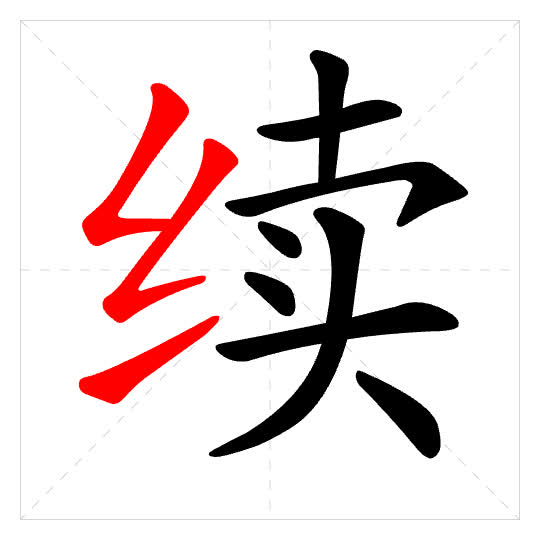
Basic Meaning
v
Often used to describe an uninterrupted or repeated action. Commonly appears in compounds like 继续 and 持续.
to continue; to extend; to go on
连接,接下去。
Words:
持续连续继续陆续续续
Sentences:
- 请继续你的演讲。Please continue your speech.
- 这个故事会如何发展,我们下期再续。How this story will develop, we will continue next time.
v
Specifically refers to adding something to the end of a pre-existing thing, such as a story or a line. The phrase 狗尾续貂 is an idiom meaning 'a wretched sequel to a fine work'.
to add on to something existing; to follow on
接在原有事物的后面或下面。
Words:
狗尾续貂续集续编续篇续作
Synonyms:
Antonyms:
Sentences:
- 这部电影很成功,所以导演正在拍续集。This movie was very successful, so the director is now filming a sequel.
- 他在信的最下面续写了几句话。He added a few more sentences at the bottom of the letter.
v
Commonly used in practical contexts like adding more time, tea, or supplies.
to add more; to replenish
添;加。
Synonyms:
添加
Antonyms:
去减
Sentences:
- 服务员,请帮我续一杯水。Waiter, please refill my glass of water.
- 我的网络套餐用完了,需要续流量。My mobile data package is used up; I need to top up my data.
n
Used as a noun in classical or formal/literary contexts. Often found in fixed, somewhat traditional terms.
a continuation; something that is carried on (classical or formal use)
〈书〉指延续下来的。
Words:
续缘续命汤延续存续承续
Synonyms:
延
Sentences:
- 这本书是前作的续篇,讲述了后来的故事。This book is a continuation of the previous work, telling the later story.
- 他们的缘分未尽,希望能再续前缘。Their bond is not over; they hope to resume their past connection.
Writing & Component
Radical纟
Structureleft_right
Stroke Count11
Strokes𠃋𠃋㇀一丨㇇丶丶一丿丶