
才才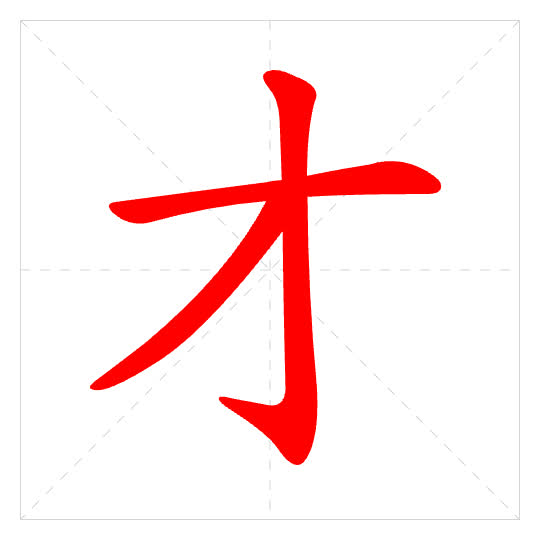
Basic Meaning
n
Often used in formal or literary contexts to describe innate or developed skills.
talent; ability
才能;能力。
Words:
才能才华才艺
Antonyms:
笨拙
Sentences:
- 他很有才能,会多种语言。He has great talent and can speak multiple languages.
- 她的才华在艺术领域很突出。Her talent is very prominent in the field of art.
adv
Commonly used to express that something happened later than expected or is limited in amount.
only; just (indicating lateness, small quantity, or restrictive conditions)
表示时间晚、数量少或条件限制。
Words:
Sentences:
- 他刚才才来,所以迟到了。He just arrived a moment ago, so he was late.
- 现在才五点,我们可以再等一会儿。It's only five o'clock now, we can wait a bit longer.
aux
Often appears in phrases like 才是 or 才不 to stress a point or contradict.
emphatic particle (used for emphasis or confirmation)
表示强调或确认。
Words:
才是才不
Sentences:
- 这才是正确的答案。This is the correct answer (emphasizing).
- 我才不去那个无聊的聚会呢。I definitely won't go to that boring party.
n
Similar to sense 1, but may be used in more specific contexts like 才干 or 才学.
talent; ability
才能。
Words:
才干才华才识才学才智多才多艺
Sentences:
- 他的才学受到大家的尊敬。His talent and learning are respected by everyone.
n
Refers to individuals with exceptional abilities, often in professional or academic settings.
talented person
有才能的人。
Words:
干才奇才全才通才天才英才人才
Sentences:
- 公司需要更多的人才来发展。The company needs more talented people to develop.
- 她是个天才,很小就学会了钢琴。She is a genius and learned piano at a very young age.
adv
Indicates an action occurred a short time ago, often used with verbs like 来 or 走.
just now; recently
表示以前不久。
Words:
才来才走
Sentences:
- 他才走,你可以打电话给他。He just left, you can call him.
adv
Typically follows words like 只有 or 必须 to show necessity before an outcome.
only then; only under certain conditions
表示只有在某种条件下然后怎样(前面常常用“只有、必须”或含有这类意思)。
Words:
才能才会
Sentences:
- 只有努力学习,才能取得好成绩。Only by studying hard can you achieve good grades.
adv
Used to downplay or minimize aspects like amount or capability.
only; merely (indicating small quantity, low frequency, poor ability, or low degree)
表示数量小,次数少,能力差,程度低等等。
Sentences:
- 他才学了三个月中文,说得不太好。He has only studied Chinese for three months and doesn't speak it very well.
adv
Adds strong emphasis to a fact, commonly in conversational Chinese.
emphatic adverb (stressing the statement, often with 呢 at the end)
表示强调所说的事(句尾常用“呢”字)。
Words:
才一会
Sentences:
- 他才休息了一会儿呢,别打扰他。He just rested for a while, don't disturb him (emphasizing the short time).
adv
Used to intensify adjectives or adverbs, though less common than other senses.
very; extremely (indicating high degree)
表示程度高。
Sentences:
- 这个菜才好吃呢,你一定要尝尝。This dish is extremely delicious, you must try it.
Writing & Component
Radical扌
Structuresingle
Stroke Count3
Strokes一亅丿