
已已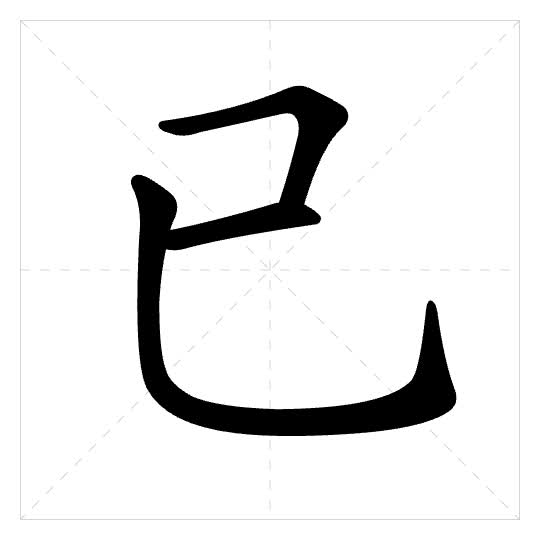
Basic Meaning
v
In modern Chinese, this sense is now mostly confined to a few set phrases or literary contexts. It is rarely used independently.
to stop; to cease; to be finished.
停止;罢了。
Words:
赞叹不已如此而已争论不已有加无已不能自已
Antonyms:
Sentences:
- 看到他精彩的表演,观众们赞叹不已。Seeing his brilliant performance, the audience couldn't stop marveling.
- 他们的争论持续了很久,仍不能自已。Their argument lasted a long time and still couldn't stop.
adv
This is the most common usage of 已. It precedes the main verb it modifies.
already; indicating a past action or completed state.
副词,已经,已然,表示过去。
Words:
已婚已故已知时间已过年事已高木已成舟现已查明由来已久
Antonyms:
未
Sentences:
- 他已经结婚了,现在很幸福。He is already married and is very happy now.
- I'm really sorry, I'm already late.
- 飞机已经起飞了,我们错过了。The plane has already taken off; we missed it.
Writing & Component
Radical己
Structuresingle
Stroke Count3
Strokes𠃍一乚