
因因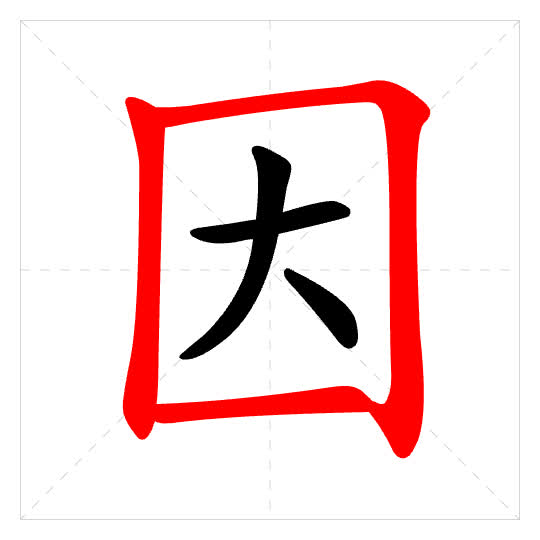
Basic Meaning
n
Often appears in contrast with 果 as part of the "cause and effect" concept. Formal context.
cause; reason
原因,产生某种结果或事情发生的条件(跟“果”相对)。
Words:
因由成因病因内因事出有因前因后果
Antonyms:
Sentences:
- 我们需要先了解事情的前因后果。We need to first understand the whole story, the cause and effect.
- 他的病因还没有查出来。The cause of his illness has not yet been identified.
conj
Used to connect clauses, indicating a causal relationship. Commonly part of conjunctions like 因为 and 因而.
because; therefore
连接分句,表示因果关系。
Words:
因为因而
Sentences:
- 今天他心情很好,因而工作效率很高。He is in a good mood today, and therefore his work efficiency is very high.
- 他工作很努力,因而得到了老板的赏识。He works very hard, and because of that, he has gained the boss's appreciation.
v
Formal/literary term. Often has a negative connotation of being uncreative or overly traditional, as in 因循守旧.
to follow (old ways); to carry on as before
〈书〉沿袭;照老样子做。
Words:
因袭陈陈相因因循因循守旧
Synonyms:
袭沿
Sentences:
- 公司的发展不能总是因袭旧的方法。The company's development cannot always follow old methods.
- 这种陈陈相因的管理模式需要改变。This kind of management model that follows outdated ways needs to change.
prep
Formal/literary preposition. Often part of set phrases used in describing methods or strategies, like 因材施教.
based on; according to
〈书〉凭借;根据。
Words:
因势利导因人而异因材施教因陋就简因地制宜
Synonyms:
凭据
Sentences:
- 老师善于因材施教,发掘每个学生的潜力。The teacher is good at teaching students according to their aptitude, tapping into each student's potential.
- 设计产品时要因势利导,满足用户的需求。When designing products, one should guide according to the trend to meet users' needs.
prep
Modern and versatile. Used as a preposition to introduce a reason, commonly followed by a noun or noun phrase.
due to; because of; owing to
因为,由于。
Words:
Sentences:
- 她因病请了两天假。She asked for two days off due to illness.
- 会议因故改期到下周一了。The meeting has been rescheduled to next Monday due to unforeseen circumstances.
- 这次比赛因天气原因取消了。This competition was canceled because of the weather.
Writing & Component
Radical囗
Structureenclosed
Stroke Count6
Strokes丨𠃍一丿丶一