
困困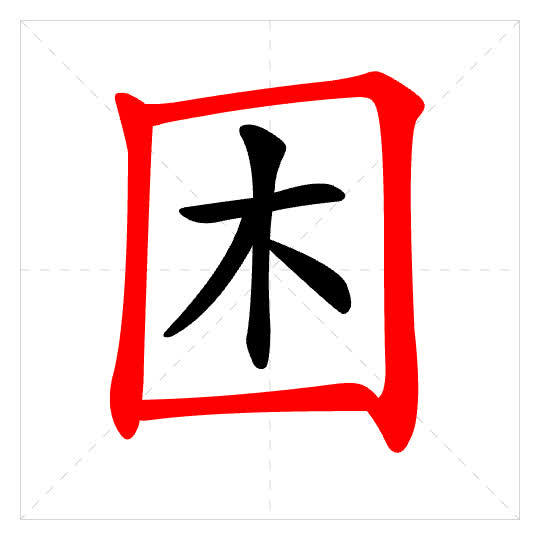
Basic Meaning
v
Often used in contexts of personal or social difficulties, such as poverty, illness, or distress.
to be trapped in hardship or suffering, or unable to escape due to environmental or conditional limitations.
陷在艰难痛苦中或受环境、条件的限制无法摆脱。
Words:
困窘困境困苦内外交困为病所困贫困
Sentences:
- 他因为失业而陷入困境。He fell into a difficult situation because of unemployment.
- 她为病所困,无法正常工作。She is trapped by illness and cannot work normally.
v
Commonly used in military or strategic contexts, implying being surrounded or restricted.
to confine or besiege within a certain range.
控制在一定范围里;围困。
Words:
困兽犹斗围困困守困住
Sentences:
- 敌军被围困在城里。The enemy troops were besieged in the city.
- 洪水困住了很多村民。The flood trapped many villagers.
adj
Used as an adjective to describe situations or conditions that are hard to deal with.
difficult.
困难。
Words:
困守困苦困厄
Sentences:
- 这个任务很困难,需要更多时间。This task is very difficult and requires more time.
adj
Describes physical or mental fatigue, often in everyday contexts like work or lack of sleep.
tired, sleepy.
疲乏,困倦。
Words:
困乏困顿劳困
Sentences:
- 工作一天后,我感到很困。After working all day, I feel very tired.
Writing & Component
Radical囗
Structureenclosed
Stroke Count7
Strokes丨𠃍一丨丿丶一