
会会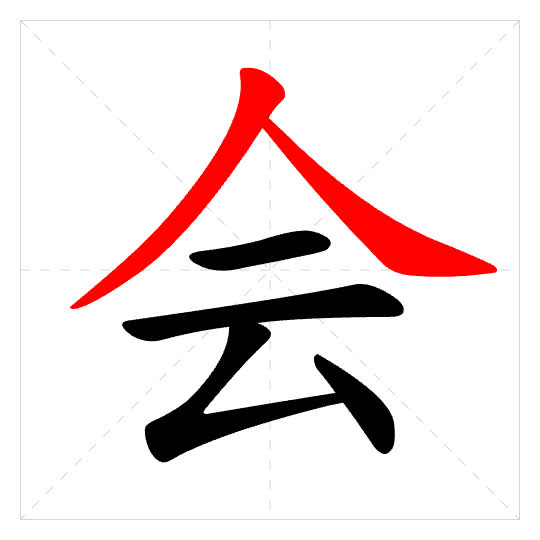
Basic Meaning
v
Refers to people or things coming together.
to gather, to assemble
聚合;合在一起。
Words:
会餐会合会集会师会诊
Synonyms:
聚
Antonyms:
Sentences:
- 老同学们打算周末会餐。The old classmates plan to have a reunion dinner this weekend.
- 两支队伍将在山顶会合。The two teams will assemble at the mountain peak.
v
to meet, to see someone
彼此见面。
Words:
会见会晤会客会面相会
Synonyms:
Sentences:
- 经理下午三点会客。The manager will meet with visitors at 3 p.m.
- 我们好久没会面了。We haven't met for a long time.
n
meeting, conference
会议,有一定目的的集会。
Sentences:
- 下午三点要开会。There is a meeting at 3 p.m.
- 学校举办了一个关于环保的座谈会。The school held a seminar on environmental protection.
n
A group of people united for a common purpose.
association, organization, society
为共同的目的而结成的团体。
Words:
工会会员基金会学生会会刊
Sentences:
- 他是学校工会的会员。He is a member of the school's labor union.
- 学生会组织了很多有趣的活动。The student union organized many interesting activities.
n
A traditional Chinese gathering with food, performances, and market stalls, often held at or near temples.
temple fair, fair
指庙会。
Words:
赶会集会庙会
Sentences:
- 小时候,我最喜欢跟奶奶去赶会。When I was a child, I loved going to the temple fair with my grandma.
n
Often seen in words like 都会 (metropolis) and 省会 (provincial capital).
city (often a capital or administrative center)
城市(通常指行政中心)。
Words:
都会省会
Synonyms:
埠都
Sentences:
- 武汉是湖北省的省会。Wuhan is the capital city of Hubei Province.
n
This sense is often part of the word 机会. By itself, it sounds literary or formal for 'moment in time'.
opportunity, moment, juncture
机会,时机,事情变化的一个时间。
Words:
机会适逢其会
Sentences:
- 他抓住了这个宝贵的机会,展示了自己的才能。He seized this precious opportunity to showcase his talent.
v
Refers to understanding the meaning, significance, or feeling of something, often intuitively.
to understand, to comprehend, to grasp
理解;懂得。
Words:
体会心领神会意会会心理会
Sentences:
- 我完全能体会你现在的心情。I completely understand how you feel right now.
- 他们相视一笑,彼此会心。They looked at each other and smiled, sharing a moment of understanding.
v
Auxiliary verb. Used for skills that are learned (e.g., languages, driving). Contrast with 能 for innate/physiological ability.
know how to, can (indicating learned ability)
助动词。表示懂得怎样做或有能力做(多半指需要学习的事情)。
Sentences:
- 他会说三种语言。He can speak three languages.
- 你小时候会游泳吗?Could you swim when you were a child?
v
Auxiliary verb. Often used in the idiom 能说会道.
to be good at, to be adept at
助动词。表示擅长。
Words:
能说会道
Sentences:
- 他真是个能说会道的人。He is really an eloquent person.
v
Auxiliary verb. Used for future possibility or prediction.
will, might, be likely to (indicating possibility)
助动词。表示有可能实现。
Sentences:
- 明天可能会下雨。It might rain tomorrow.
- 你这么努力,一定会成功。If you work so hard, you will definitely succeed.
v
Slightly formal/old-fashioned. More common in compounds like 会账.
to pay (a bill)
付账。
Words:
会钞会账
Synonyms:
Sentences:
- 今天这顿饭我来会账。I'll pay the bill for this meal today.
q
Classifier/measure word. Almost always used with 一 or demonstratives like 这/那, forming words like 一会儿.
a short while, a moment
(–儿)一小段时间。
Sentences:
- 请等我一会儿。Please wait for me a moment.
v
Similar to sense 11 & 12 but emphasizes thorough familiarity, sometimes used in southern dialects.
to be familiar with, to know well
熟悉;通晓。
Synonyms:
契善
Sentences:
- 我会武术。I know martial arts.
Writing & Component
Radical人
Structuretop_bottom
Stroke Count6
Strokes丿㇏一一𠃋丶
Common Words
Related Articles
One unified blog surface for comparison and usage reading, grouped by the same headword.