
克克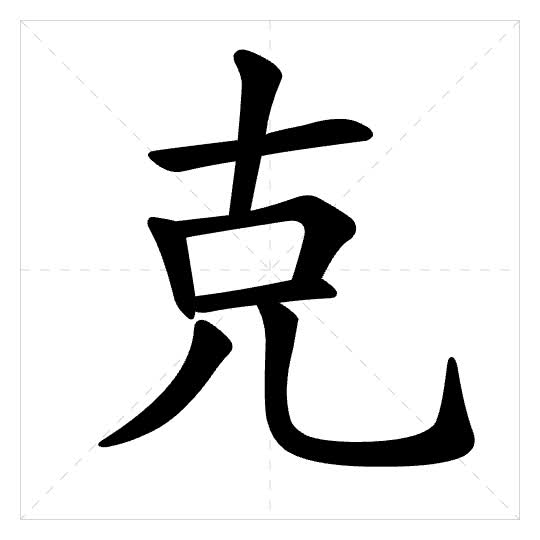
Basic Meaning
v
Often used in classical or formal contexts, as in idioms like 克勤克俭.
can; be able to
能够。
Words:
克勤克俭克勤于邦克俭于家不克分身
Sentences:
- 他克勤克俭,终于存够了钱。He was diligent and frugal, and finally saved enough money.
v
Common in phrases like 克己 (restrain oneself) or 以柔克刚 (use softness to overcome hardness).
overcome; restrain; subdue
克服,克制,制伏。
Words:
克己奉公|以柔克刚克己
Sentences:
- 他努力克己,改掉了坏习惯。He worked hard to restrain himself and broke the bad habit.
- 以柔克刚是处理冲突的好方法。Using softness to overcome hardness is a good way to handle conflicts.
v
Typically used in military or competitive contexts, e.g., 克敌制胜 (defeat the enemy and win victory).
capture (a stronghold); defeat
攻下据点;战胜。
Words:
攻无不克克敌制胜克复克敌
Sentences:
- 军队攻无不克,很快占领了城市。The army was invincible and quickly captured the city.
- 他们克敌制胜,赢得了比赛。They defeated the enemy and won the competition.
v
Formal usage, often in historical or official contexts, as in 克期 (set a fixed date).
set a strict deadline
严格限定(期限)。
Words:
克日兴师克期克日
Sentences:
- 公司克日完成这个项目。The company set a strict deadline to complete this project.
- 他们克期出发,不能迟到。They set a fixed date to depart and cannot be late.
q
1 克 equals 1/1000 of a kilogram; commonly used in measurements like 千克 (kilogram).
gram (unit of mass or weight), symbol g
质量或重量单位,符号g。1克等于1千克(公斤)的千分之一。旧称公分、克兰姆。
Words:
Sentences:
- 这个苹果重200克。This apple weighs 200 grams.
- 一公斤等于一千克。One kilogram equals one thousand grams.
v
Usually negative, implying unfair reduction, as in 克扣 (embezzle or withhold).
reduce the amount due; shortchange
减少应给的数量。
Words:
克扣克斤短两
Sentences:
- 老板克扣了员工的工资。The boss withheld the employees' wages.
Writing & Component
Radical十
Structuretop_middle_bottom
Stroke Count7
Strokes一丨丨𠃍一丿乚