
破破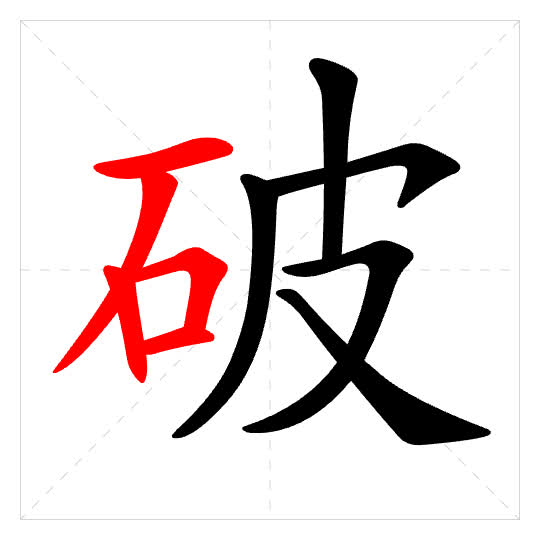
Basic Meaning
v
Commonly describes objects breaking or cracking.
to break; to be broken (i.e., a complete thing becomes damaged and incomplete)
完整的东西受到损伤变得不完整。
Words:
打破破裂破碎
Sentences:
- 我的手机屏幕破了。My phone screen is broken.
- 小心别让玻璃杯破裂。Be careful not to let the glass break.
v
Often used with deliberate force, as in 破坏 (to damage).
to damage; to destroy; to break apart
使损坏;使分裂;劈开。
Words:
破坏破釜沉舟势如破竹破损破门而入
Synonyms:
Sentences:
- 孩子们在沙滩上破坏了一个沙堡。The kids destroyed a sandcastle on the beach.
- 这幅画在运输过程中破损了。This painting was damaged during transport.
v
Typically used in phrases like 破开 or 破成.
to break (a large bill or unit) into small change or smaller units
整的换成零的(多和“开、成”构成动补式)。
Sentences:
- 我需要把这一百块钱破成零钱。I need to break this hundred-yuan bill into change.
v
Used for abstract or figurative barriers like limits or conventions.
to break through; to break (a rule, habit, or record)
突破;破除(规定、习惯、思想等)。
Words:
破记录破例破格
Synonyms:
Sentences:
- 他在运动会上破了世界记录。He broke the world record at the sports meet.
- 为了照顾他,老师破例允许他晚交作业。To accommodate him, the teacher made an exception and allowed him to submit his homework late.
v
Used in military or competitive contexts.
to defeat (an enemy); to capture (a stronghold)
打败(敌人);打下(据点)。
Words:
破城攻破城池大破敌军
Synonyms:
Sentences:
- 军队最终攻破了那座坚固的城池。The army finally captured that heavily fortified city.
v
Often found in polite or humble expressions like 破费.
to spend; to expend (money, time, or effort)
花费,耗费。
Words:
破钞破费破工夫
Sentences:
- 今天让你请客,真不好意思,让你破费了。I'm so sorry to have you treat me today, making you spend money.
v
Describes revealing a secret or hidden fact.
to expose; to reveal (the truth); to lay bare
使真相露出;揭穿。
Words:
一语道破说破
Sentences:
- 他的谎言很快就被一语道破了。His lie was quickly exposed with a single remark.
adj
Used as an adjective before nouns like 衣服 (clothes).
broken; tattered; worn-out (describing a damaged physical state)
受过损伤的;破烂的。
Words:
破衣服破鞋
Synonyms:
烂
Sentences:
- 这件破衣服我不能再穿了。I can't wear these tattered clothes anymore.
adj
Derogatory adjective; informal, often expressing disdain.
lousy; no-good; contemptible
不好的,令人鄙视的。
Words:
破戏破货
Sentences:
- 别听他的,他说的都是些破事。Don't listen to him; he's just talking about some nonsense.
- 他开着一辆破车,但自己很爱惜。He drives a lousy car, but he takes good care of it.
Writing & Component
Radical石
Structureleft_right
Stroke Count10
Strokes一丿丨𠃍一㇇丿丨㇇㇏