
突突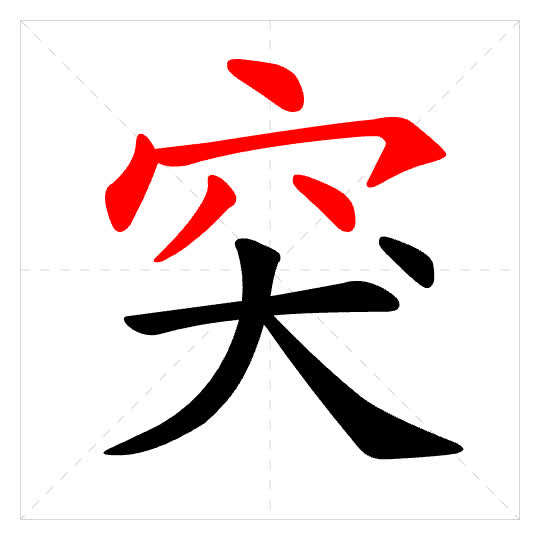
Basic Meaning
v
Often combined with 出 or 起. For describing objects or features protruding.
to bulge; to stick out
凸起;凸出。
Words:
突起突出
Synonyms:
凸
Antonyms:
凹
Sentences:
- 这块石头突出地面很高。This rock sticks out high above the ground.
- 这面墙有几处突起的砖块。There are several bulging bricks on this wall.
adv
As an adverb, commonly used with 然, forming 突然. It usually modifies verbs.
suddenly; abruptly
忽然。
Words:
突变突赠突减突发突击
Sentences:
- 天气突变,我们只好取消了行程。The weather changed suddenly, so we had to cancel our trip.
v
Describes a forceful forward movement, often to break through a barrier or obstacle.
to charge; to dash
猛力冲。
Words:
突破突围狼奔豕突冲突左冲右突
Sentences:
- 士兵们成功突破了敌人的防线。The soldiers successfully broke through the enemy's defense line.
- 他抱着球向对方的球门猛力突进。He charged forcefully towards the opponent's goal with the ball.
on
Imitates the sound of an engine running or a heart beating.
Onomatopoeia (reduplicated as 突突)
模拟某些有节奏的声音。
Words:
突突
Sentences:
- 摩托车发出突突的声音。The motorcycle makes a chugging sound.
- 我紧张得心突突直跳。I was so nervous that my heart was pounding.
Writing & Component
Radical穴
Structuretop_bottom
Stroke Count9
Strokes丶丶㇇丿丶一丿㇏丶