
就就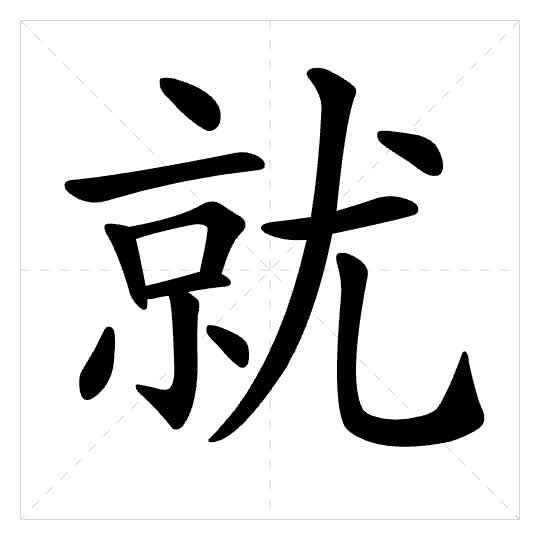
Basic Meaning
v
Mostly used in fixed or formal expressions.
to approach; to draw near; to get close to.
凑近;接近。
Words:
迁就避难就易避重就轻驾轻就熟就和
Synonyms:
凑
Sentences:
- 他很迁就自己的孩子。He is very accommodating towards his children.
v
Often used with the sense of beginning an activity or entering a state.
to take up; to start; to engage in.
从事,开始进入。
Words:
就学就业就职就寝就事
Sentences:
- 政府出台了一系列促进就业的政策。The government has introduced a series of policies to promote employment.
v
Used in formal or historical contexts, often with a sense of being captured or meeting an end.
to be (subjected to); to undergo.
被;受。
Words:
就戮就缚就封就歼就擒
Sentences:
- 罪犯最终就擒。The criminal was finally captured.
v
Used to indicate successful completion or the act of bringing something to fruition.
to accomplish; to complete; to become established.
完成;确定。
Words:
就绪功成名就造就人才成就造就
Sentences:
- 准备工作已经就绪。The preparations are already in place.
- 他取得了很大的成就。He has achieved great success.
v
Indicates movement to a specific position or the act of assuming a role.
to go to; to take one's place.
到。
Words:
就位就座就任就席各就各位
Synonyms:
Sentences:
- 请各位就座。Please take your seats, everyone.
prep
As a preposition, meaning (1) often uses '就着'. Meaning (2) often sets the topic or scope of discussion (e.g., 就这个问题).
(1) while, taking advantage of (the convenience). (2) with regard to; concerning; within the scope of.
①趁着(当前的便利);借着(有时跟“着”连用)。②表示动作的对象或话题的范围。
Words:
就便就近就手儿就着就势
Sentences:
- 我去超市,就便买了些水果。I went to the supermarket and, while I was there, bought some fruit.
- 就这个问题,大家有什么想法?Regarding this issue, what are everyone's thoughts?
adv
Used to emphasize the earliness of an action.
as early as; already.
表示事情发生得早或结束得早。
Sentences:
- 他六点就起床了。He got up as early as 6 o'clock.
adv
Used in conditional sentences, often following '如果', '只要', '既然'.
then; in that case.
表示在某种条件或情况下自然怎么样(前面常用“只要、要是、既然”等或者含有这类意思)。
Sentences:
- 只要你努力,就一定能成功。As long as you work hard, you will definitely succeed.
adv
Used for strong affirmation or to mark resolute intent.
exactly; precisely; just (to emphasize).
加强肯定,表示事实正是如此或意志坚决,不容改变。
Sentences:
- 我就不去,你能怎么样?I just won't go, what can you do about it?
adv
Expresses limitation or contrast ('only this, not that').
only; solely; just.
单;只;偏偏。
Sentences:
- 别人都同意了,就他反对。Everyone else agreed, only he objected.
adv
Used in the structure "X就X吧", meaning 'If it's X, then let it be X.'
okay (with repeated word, indicates tolerance).
用在相同的两个词语之间,表示容忍。
Sentences:
- 贵就贵吧,我还是买了。Expensive as it is, I still bought it.
adv
Used in comparative contexts to highlight a large number or high degree.
as many as; up to (for emphasis on quantity or capability).
表示对比起来数目大,次数多,能力强等。
Sentences:
- 他一顿饭就吃了三百块钱。He spent as much as 300 yuan on just one meal.
adv
Indicates immediate future.
soon; about to; in a moment.
表示很短时间内即将发生。
Sentences:
- 火车就快开了。The train is about to leave.
adv
Indicates immediate succession of events, often with '一...就...' structure.
then; right after.
表示前后事情紧接着。
Sentences:
- 他一到,我们就出发。We'll set off as soon as he arrives.
Writing & Component
Radical尢
Structureleft_right
Stroke Count12
Strokes丶一丨𠃍一亅丿丶一丿乚丶