
完完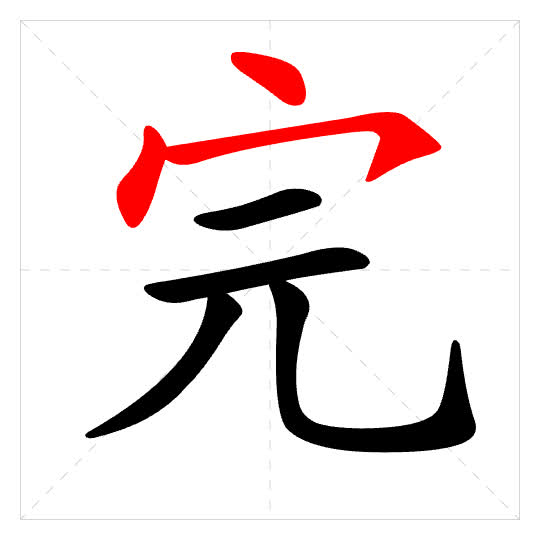
Basic Meaning
n
Most commonly used as part of compounds like 完全 (wánquán) or 完美 (wánměi). Rarely used as a standalone noun in modern spoken Chinese.
intact; whole; complete
齐全;完整。
Sentences:
- 这个计划已经非常完善。This plan is already very thorough and complete.
- 我们追求完美的结果。We are pursuing a perfect result.
v
Often followed by an object that represents the task or thing being completed, e.g., 完任务 (wán rènwu).
to complete; to accomplish (a task, work, or goal)
做成,了结。
Words:
完工完卷完稿完婚完成任务
Sentences:
- 我今天必须完成这个项目。I must finish this project today.
- 祝贺你们圆满完成比赛!Congratulations on successfully completing the competition!
v
Often used intransitively or as a verb complement to indicate the conclusion of an event or action. Close in meaning to sense 2, but focuses more on the state of being finished.
to be over; to finish; to end
了结;完毕。
Words:
完事完毕完结没完没了
Sentences:
- 会议下午五点完毕。The meeting will finish at 5 p.m.
- 我的话说完了。I've finished speaking.
v
Often used as a verb complement (V+完) or in a resultative construction (把...用完, 吃完了) to indicate the total consumption of a resource or item.
to use up; to run out; to have nothing left
消耗尽;没有剩的。
Words:
用完了做完了卖完了
Sentences:
- 牛奶已经喝完了。The milk is all drunk up.
- 我的手机电用完了。My phone's battery is all used up.
v
Nowadays, 完 in this sense is mostly found in specific historical or formal terms like 完税 (wán shuì). In modern contexts, 交 (jiāo) is more commonly used for 'to pay'.
to pay (taxes, grain as tax)
交纳(赋税)。
Words:
完粮完税
Sentences:
- 过去,农民需要向政府完粮。In the past, farmers needed to pay grain tax to the government.
- 这是一份完税证明。This is a certificate of tax payment.
n
Almost exclusively used as part of the compound 完败 (wánbài). It is not used as a standalone noun to mean 'death' in modern Chinese.
total defeat; total loss (often in competitive contexts)
指死亡;失败。
Words:
完败
Synonyms:
亡败
Sentences:
- 主队昨天遭遇了一场完败。The home team suffered a complete defeat yesterday.
Writing & Component
Radical宀
Structuretop_bottom
Stroke Count7
Strokes丶丶㇇一一丿乚