
终终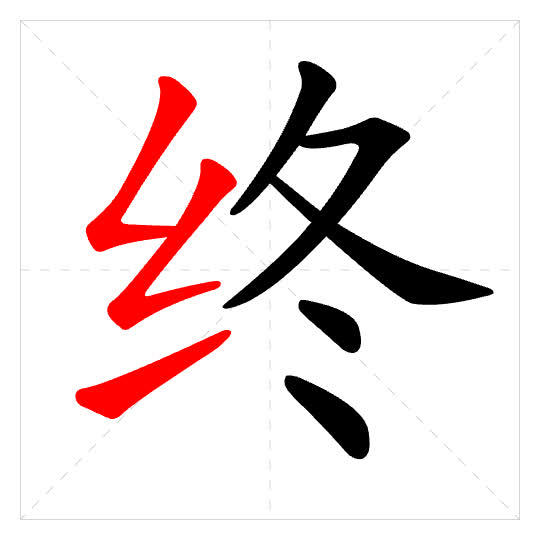
Basic Meaning
n
Often used in contrast with '始' to mean 'from start to finish'. Commonly found in fixed phrases.
the end, the outcome, the final part (as opposed to 'start').
事情的结局;最后(跟“始”相对)。
Words:
终点年终告终剧终有始无终自始至终
Synonyms:
尾
Antonyms:
Sentences:
- 电影的终点就是故事结束的地方。The end of the movie is where the story finishes.
- 做事情要有始有终。When doing things, one should have a beginning and an end.
v
Used in formal or literary contexts to refer to death, especially the end of one's life.
to die; to end one's life.
指人死亡。
Words:
临终无疾而终寿终正寝送终
Sentences:
- 那位老人在家人的陪伴下平静地终了。That elderly person passed away peacefully with his family by his side.
adv
An adverb expressing that something will be the final result despite other possibilities.
after all, in the end, ultimately.
副词,到底,总归。
Words:
终须一别终归
Sentences:
- 他终归还是选择了离开。In the end, he still chose to leave.
- 问题终究会解决的。The problem will be solved eventually.
adj
Used before a time noun to mean 'the whole period of'. Similar to 全.
whole, entire (refers to a complete period from beginning to end).
从开始到末了的(整段时间)。
Words:
终日终生终身
Sentences:
- 他终日忙于工作。He is busy with work all day long.
- 学习是终身的任务。Learning is a lifelong task.
adj
Functions as an adjective describing the state of being over or concluded.
ended, finished, concluded.
结束。
Words:
剧终告终
Sentences:
- 这个故事终于告终了。This story has finally come to an end.
Writing & Component
Radical纟
Structureleft_right
Stroke Count8
Strokes𠃋𠃋㇀丿㇇㇏丶丶