
处处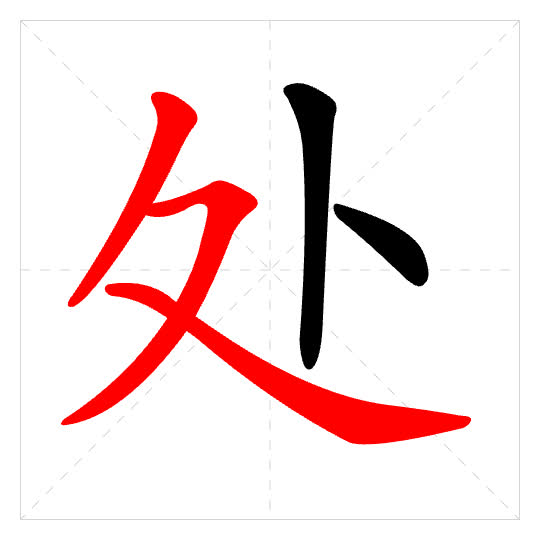
Basic Meaning
v
literary usage, often found in classical or formal contexts
to dwell; to reside
〈文〉居住。
Words:
穴居野处五方杂处穴处岩处野处
Sentences:
- 古人常穴居野处Ancient people often dwelled in caves and wilderness.
v
commonly used in social contexts, e.g., describing relationships
to get along; to interact with others
交往;与他人在一起生活。
Words:
处世相处和睦相处和平共处处得来
Synonyms:
Sentences:
- 我们要学会和睦相处We need to learn to get along harmoniously.
- 他们相处得很好They get along very well.
v
used to describe one's position or circumstances
to be in (a place or situation)
置身在(某地、某种情况等)。
Words:
设身处地养尊处优处境处变不惊处身
Sentences:
- 他处境很困难He is in a difficult situation.
- 设身处地为别人着想Put yourself in others' shoes.
v
often refers to managing affairs or tasks
to handle; to deal with
处置;办理。
Words:
处理处置处事处事有方处断
Sentences:
- 她处理问题很有效率She handles problems very efficiently.
- 这件事需要妥善处置This matter needs to be dealt with properly.
v
typically used in legal or disciplinary contexts
to punish; to penalize
惩罚;处分。
Words:
论处处罚处死惩处处治
Synonyms:
罚惩治
Sentences:
- 违反规定会受到处罚Violating the rules will result in punishment.
- 他被处以罚款He was penalized with a fine.
Writing & Component
Radical夂
Structuresemi_enclosed
Stroke Count5
Strokes丿㇇㇏丨丶