
向向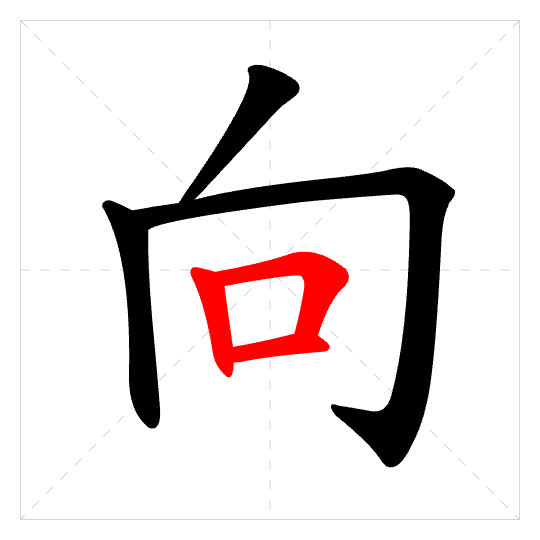
Basic Meaning
v
Specifically means to face with one's front, such as the face or chest, opposite of 背. Often used in directional phrases.
to face; to turn towards
对着,朝着,特指脸部或胸部对着,跟“背”相对。
Words:
向东向阳面向向上向隅
Antonyms:
Sentences:
- 我的房间窗户向东,早上阳光很好。My room's window faces east, so the morning sunlight is very good.
- 请面向我,我们拍一张照片。Please face me, let's take a photo.
n
direction
方向。
Words:
风向志向去向航向晕头转向
Sentences:
- 请告诉我正确的方向,我迷路了。Please tell me the correct direction; I'm lost.
- 他的志向是成为一名医生。His aspiration is to become a doctor.
v
to side with; to be partial to
袒护;偏袒。
Words:
偏向护向
Synonyms:
偏袒
Sentences:
- 在争论中,他明显偏向他的朋友。In the argument, he clearly sided with his friend.
- 裁判不应该护向任何一方。A referee should not be partial to either side.
prep
Functions like English prepositions 'to' or 'towards'. Frequently used with verbs of motion.
to, towards; used to introduce the direction, target, or object of an action
引进动作的方向、目标或对象。
Words:
向东走流向远方向前看向后看
Sentences:
- 她向我招手打招呼。She waved her hand towards me to say hello.
- 我们一起向前看。Let's look forward together.
adv
Used in formal or literary contexts. Often appears in set phrases like 向来 or 一向. A formal equivalent of the colloquial 从来.
(literary) always; ever; from past to the present
〈文〉表示从过去到现在,相当于“从来”。
Words:
向来一向向例向不饮酒向有研究
Sentences:
- 他向来很守时。He has always been very punctual.
- 我们家一向有晚饭后散步的习惯。Our family has always had the habit of taking a walk after dinner.
Writing & Component
Radical口
Structuresemi_enclosed
Stroke Count6
Strokes丿丨𠃌丨𠃍一