
取取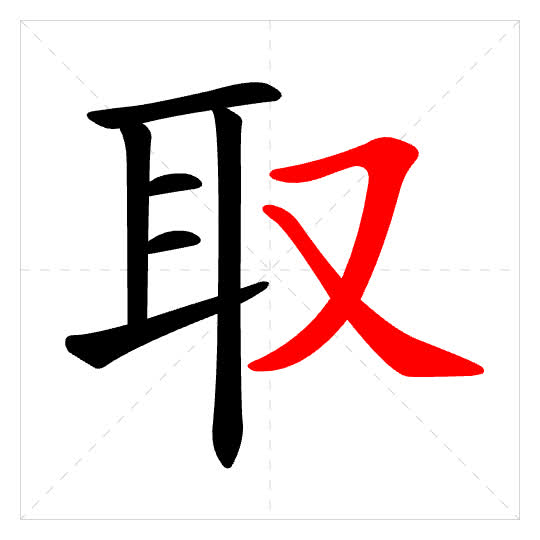
Basic Meaning
v
Often used for physically retrieving or receiving something (e.g., from a bank, office, or counter).
to get; to take; to pick up
拿到手里。
Words:
取款取信领取取钱取行李
Synonyms:
Sentences:
- 我需要去银行取钱。I need to go to the bank to withdraw money.
- 请在柜台领取您的包裹。Please pick up your parcel at the counter.
v
Used for abstract gains, consequences, or deriving something (e.g., warmth, pleasure, a lesson). The phrase 咎由自取 is a fixed idiom meaning 'to have only oneself to blame'.
to obtain; to incur; to gain
得到;招致。
Words:
取乐取暖吸取咎由自取自取灭亡
Synonyms:
得获
Sentences:
- 我们围坐在火边取暖。We sat around the fire to get warm.
- 我们要从失败中吸取教训。We must learn lessons from our failures.
v
Focuses on the act of picking or selecting from options, often for a specific purpose (e.g., a name, material, angle).
to choose; to select; to adopt
挑选,采用。
Words:
取材取景取名可取去粗取精
Sentences:
- 这张照片的取景很美。The composition (chosen scene) of this photo is very beautiful.
- 他们给孩子取了一个好听的名字。They gave their child a nice-sounding name.
v
Used in contexts of conflict, competition, or forceful acquisition.
to capture; to seize; to take by force
攻下;夺取。
Words:
夺取备取
Sentences:
- 军队成功夺取了那座城市。The army successfully captured that city.
v
Specifically refers to the formal acceptance into a school, program, or position.
to admit; to enroll (a student); to accept (an applicant)
录取。
Words:
录取
Sentences:
- 她很高兴被那所大学录取了。She is very happy to have been admitted to that university.
Writing & Component
Radical又
Structureleft_right
Stroke Count8
Strokes一丨丨一一㇀㇇㇏