
去去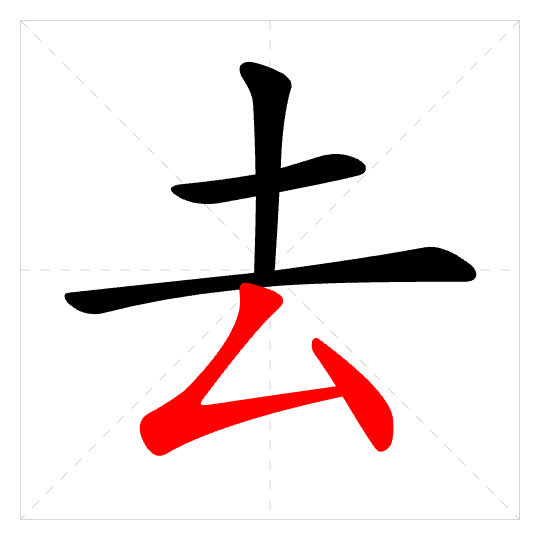
Basic Meaning
v
to go (from the speaker's location to another place, opposite of 'lai2')
从说话人所在地到别的地方(跟“来”相对)。
Words:
去处去路去向
Synonyms:
Sentences:
- 我明天去北京I am going to Beijing tomorrow.
- 你知道去超市的路吗Do you know the way to the supermarket?
- 他经常去图书馆看书He often goes to the library to read books.
v
to leave
离开。
Words:
去留去职去世去国去留两便
Synonyms:
Sentences:
- 他决定去职,寻找新机会He decided to leave his job and look for new opportunities.
- 刘老师在工作去留的问题上一直犹豫不决。Teacher Liu was hesitant about whether to stay or leave the job.
v
to lose; to be gone
失去;失掉。
Words:
大势已去
Sentences:
- 大势已去,我们得想新办法The situation is lost, and we need to think of a new plan.
v
can be used with 'le' or reduplicated
to remove; to eliminate
除去;除掉(可带“了”,可重叠)。
Words:
去掉去火去粗取精去伪存真去皮
Antonyms:
Sentences:
- 请去掉苹果的皮Please remove the skin from the apple.
- 喝绿茶可以去火Drinking green tea can help eliminate internal heat.
v
literary usage
to be distant from; to be apart
〈书〉距,距离。
Words:
相去
Sentences:
- 这里相去学校不远It is not far from here to the school.
adj
past (referring to time, often the past year)
过去的(时间,多指过去的一年)。
Words:
Sentences:
- 去年我去过上海I went to Shanghai last year.
v
basic meaning unchanged without 'qu4'
used before another verb to indicate intention to do something
用在另一动词前面,表示要做某事(不用“去”时,基本意思不变)。
Words:
去看去玩去跑去写去读
Sentences:
- 我们去看电影吧Let's go watch a movie.
- 他去玩电子游戏了He went to play video games.
v
used after a verb or verb phrase to indicate going to do something
用在动词或动词结构后面表示去做某件事。
Sentences:
- 我打算吃饭去I plan to go eat.
- 他们散步去公园了They went for a walk to the park.
v
directional verb used after a verb to indicate movement away from the original location
趋向动词。用在动词后,表示人或事物随动作离开原来的地方。
Words:
拿去捎拿
Sentences:
- 请把这本书拿去Please take this book away.
- 他开车去公司了He drove away to the company.
v
directional verb used after a verb to indicate continuation of an action
趋向动词。用在动词后,表示动作的继续等。
Words:
信步走去一眼看去
Sentences:
- 他信步走去,欣赏风景He strolled on, enjoying the scenery.
- 一眼看去,房间很整洁At a glance, the room looks very tidy.
v
used between verb phrases to indicate method/direction/attitude and purpose
用在动词结构(或介词结构)与动词(或动词结构)之间,表示前者是后者的方法、方向或态度,后者是前者的目的。
Words:
走去拿跑去追飞去看爬去取
Sentences:
- 他跑去追那只猫He ran to chase that cat.
- 我们走去拿快递We walked to pick up the package.
Writing & Component
Radical厶
Structuretop_bottom
Stroke Count5
Strokes一丨一𠃋丶