
出出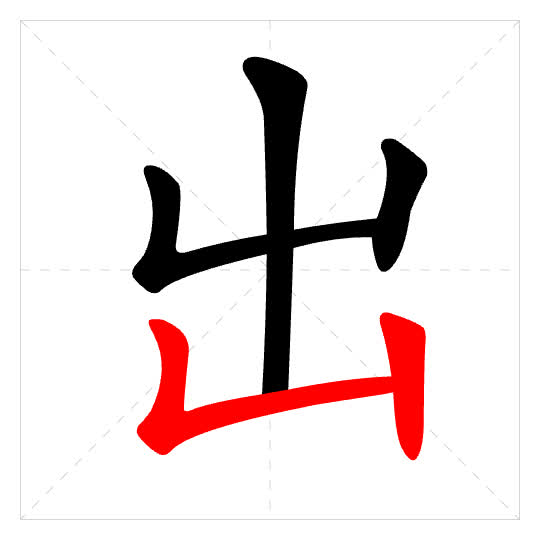
Basic Meaning
v
often used with directional complements like '来' or '去'
to go out; to exit (from inside to outside, opposite of 'enter' or 'go in')
由内往外;从里边到外边(跟“进、入”相对)。
Sentences:
- 他每天七点出门去上班He goes out to work at seven every day.
- 请等一下,我马上出来Please wait a moment, I'll come out right away.
v
to come to; to appear at (a place or event)
来到。
Words:
出庭出席出世出场出勤
Synonyms:
Sentences:
- 明天我要出庭作证I will appear in court to testify tomorrow.
- 他很少出席公司的会议He rarely attends company meetings.
v
to exceed; to go beyond
超出。
Words:
出轨出界出众出色出人头地
Synonyms:
Sentences:
- 他的成绩出众,总是第一名His grades are outstanding; he's always first place.
- 球出界了,所以对方得分The ball went out of bounds, so the other team scored.
v
to take out; to pay out
往外拿;支付。
Words:
出力出题支出出钱出款
Antonyms:
Sentences:
- 公司每月支出很多钱The company pays out a lot of money every month.
- 老师今天要出题考试The teacher will set questions for the exam today.
v
to produce; to yield; to happen
出产;产生;发生。
Words:
出煤出盐出产出事出问题
Sentences:
- 这个地区出产很多水果This region produces a lot of fruit.
- 路上出事了,所以交通堵塞An accident happened on the road, so traffic is jammed.
v
to publish; to release (books, music, etc.)
出版,编印发行书刊或制作音像制品。
Words:
出版出唱片出书出品出专辑
Sentences:
- 他去年出版了一本新书He published a new book last year.
- 乐队计划明年出专辑The band plans to release an album next year.
v
to sprout; to emit; to vent (emotions or substances)
生出;发散;发泄。
Words:
出芽出气出汗出天花
Sentences:
- 春天到了,树开始出芽Spring has come, and the trees are starting to sprout buds.
- 运动后,我经常出汗After exercising, I often sweat.
v
formal or literary usage
to be found in; to originate from (used for citations or sources)
引文、典故等见于某处。
Words:
出处语出
Sentences:
- 这个成语语出《论语》This idiom originates from the Analects of Confucius.
- 请注明引文的出处Please indicate the source of the citation.
v
to show; to become apparent
显露。
Words:
出名出头水落石出出面出洋相
Synonyms:
显露
Antonyms:
隐藏
Sentences:
- 他因为这部电影而出名He became famous because of this movie.
- 真相终于水落石出The truth finally came to light.
q
specific to drama or theater contexts
a measure word for a play or act in traditional Chinese opera
一本传奇中的一个大段落叫一出,戏曲的一个独立剧目也叫一出。
Words:
一出戏
Synonyms:
Sentences:
- 昨晚我们看了一出京剧Last night, we watched a Peking opera play.
- 这出戏非常精彩This play is very exciting.
v
grammatical function as a complement
used as a verb complement to indicate direction or result
用在表示动作的词后面,表示趋向或结果。
Words:
Sentences:
- 他伸出手来和我握手He reached out his hand to shake mine.
- 我拿不出那么多钱I can't come up with that much money.
Writing & Component
Radical凵
Structuresingle
Stroke Count5
Strokes㇄丨丨㇄丨