
具具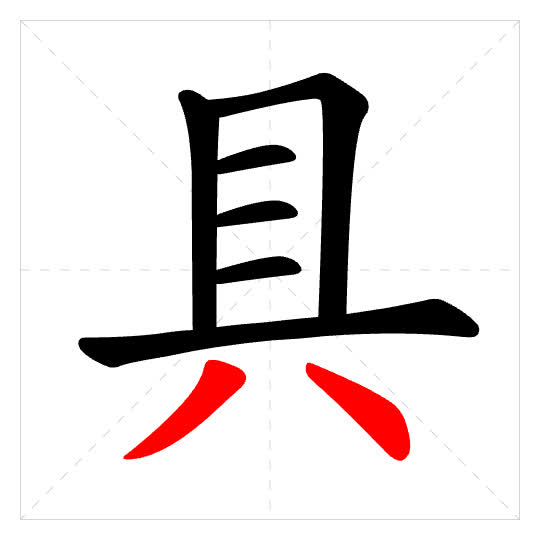
Basic Meaning
n
Appears in compound words like 家具 (furniture), 文具 (stationery).
tool; utensil; implement; (refers to items designed for specific purposes)
器具,器物。
Words:
炊具家具农具文具灯具
Sentences:
- 厨房里有很多炊具There are many cooking utensils in the kitchen.
- 这套新家具很漂亮This set of new furniture is very beautiful.
- 文具盒里装满了铅笔和橡皮The stationery box is filled with pencils and erasers.
q
This usage is formal/literary.
(literary) a unit for items like coffins, corpses, and certain objects
〈书〉用于棺材、尸体和某些器物。
Words:
座钟一具
Sentences:
- 警方接到报案后迅速赶到现场,在那间废弃的仓库里发现了一具尸体。Police arrived at the scene quickly after receiving the report and found a body in the abandoned warehouse.
v
Often used in formal or abstract contexts, e.g., 具备能力 (to have the capability).
to have; to possess
备,备有。
Words:
具备略具规模初具规模略具轮廓具有
Sentences:
- 他具备了领导团队的能力He possesses the ability to lead a team.
- 这个新园区已初具规模This new park has already taken on a basic form.
adj
This meaning is archaic/literary and mostly appears in historical texts or idioms.
(literary) talent; ability
〈书〉才干;才能。
Words:
才具干城之具
Sentences:
- 古代评价官员,常看其才具In ancient times, when evaluating officials, their talent was often considered.
v
This usage is formal/literary.
(literary) to state; to write down; to detail
〈书〉陈述;写上。
Words:
具名条具时弊
Sentences:
- 请在表格上具名Please write your name on the form.
Writing & Component
Radical八
Structuretop_bottom
Stroke Count8
Strokes丨𠃍一一一一丿丶