
其其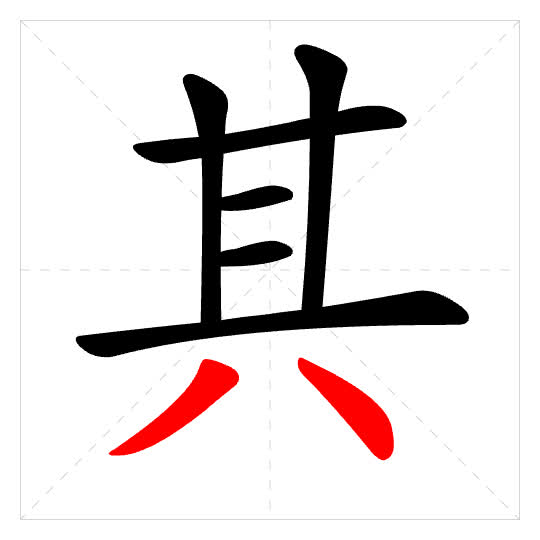
Basic Meaning
pron
Used as a formal or written equivalent to "他/她/它(tā)" and their plural forms. Common in fixed phrases like 其他 (qí tā), 其中 (qí zhōng).
① he; him; they; them. ② his; her; its; their. ③ that; those.
代词。①他,他们。②他的,他们的。③那,那个,那些。
Words:
Sentences:
- 这本书很有趣,我向其他人推荐了它。This book is very interesting, I recommended it to other people.
- 他谈到了他的计划,但我没有完全理解其细节。He talked about his plan, but I didn't fully understand its details.
pron
Archaic or formal usage, often seen in idioms or classical-style writing. Usually functions as a demonstrative pronoun, not a personal pronoun.
<literary> That; such.
〈书〉代指示代词。那个;那样。
Words:
Sentences:
- 其中的道理,你需要慢慢体会。You need to slowly comprehend the reasoning within it (among those).
pron
Used in idiomatic expressions like 忘其所以 (wàng qí suǒ yǐ) where it does not refer to a specific person or thing.
Vague or indefinite pronoun.
指示代词。虚指。
Words:
忘其所以
Sentences:
- 其人其事,都已成为过去。The person and the events are now in the past.
adv
Used as a suffix following certain adverbs like 极 (jí) or 尤 (yóu). It does not carry independent meaning but forms compound adverbs like 极其 (jí qí, extremely).
adverb suffix.
后缀。
Words:
极其尤其如其
Sentences:
- 这里的风景极其美丽。The scenery here is extremely beautiful.
- 我喜欢吃水果,尤其是苹果。I like to eat fruit, especially apples.
Writing & Component
Radical八
Structuretop_bottom
Stroke Count8
Strokes一丨丨一一一丿丶