
今今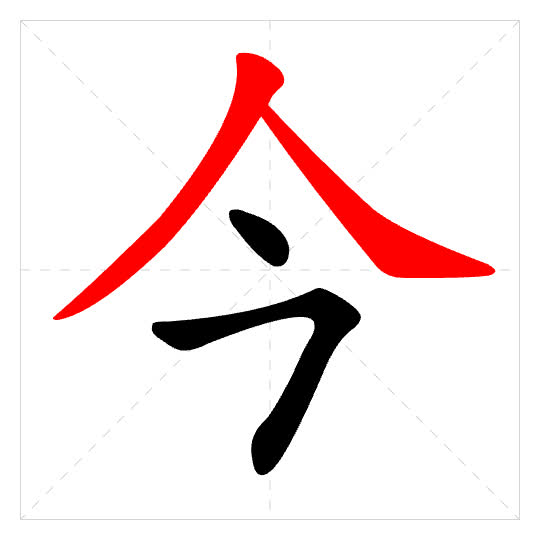
Basic Meaning
n
often used in contrast with '古' or '昔'
now; modern times (as opposed to 'ancient' or 'past')
现在;现代(跟“古”“昔”相对)。
Words:
今非昔比抚今追昔当今今人古为今用厚今薄古
Synonyms:
Antonyms:
古昔
Sentences:
- 当今社会变化很快Modern society changes very quickly.
- 古为今用是一个重要的原则Using the past for the present is an important principle.
n
commonly used in time expressions
current; present (referring to year, day, or parts thereof)
当前的;现在的(年、天及其部分)。
Words:
Antonyms:
Sentences:
- 今天天气很好The weather is very good today.
- 今晨我起得很早I woke up very early this morning.
Writing & Component
Radical人
Structuretop_bottom
Stroke Count4
Strokes丿㇏丶㇇