
个个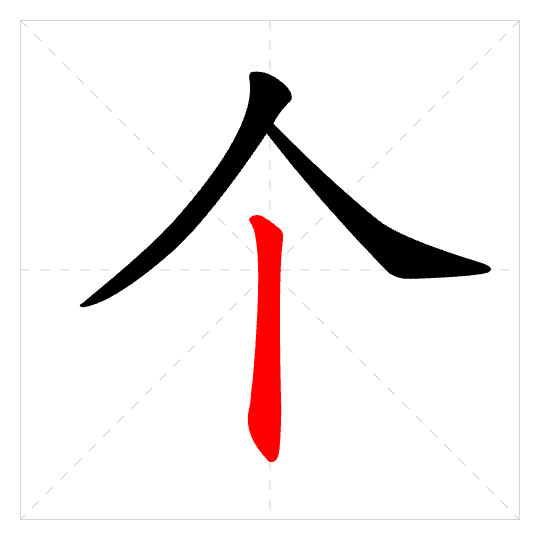
Basic Meaning
q
The most common and versatile measure word in Chinese.
A general-purpose measure word. (1) Used for nouns that lack a specific measure word (some nouns can use 'ge' alongside a specific measure word). (2) Used before approximate numbers to give a tone of casualness. (3) Used after a verb with an object to indicate the frequency of an action (extended usage where 'ge' is not strictly required). (4) Used between a verb and its complement to slightly give the complement the nature of an object (sometimes used with 'de').
①用于没有专用量词的名词(有些名词除了用专用量词之外也能用“个”)。②用于约数的前面,使句子显得语气轻松、随便。③用于带宾语的动词后面,有表示动量的作用(原来不能用“个”的地方也用“个”)。④用于动词和补语的中间,使补语略带宾语的性质(有时跟“得”连用)。
Words:
一个两个五个八个十个
Sentences:
- 桌子上有三个苹果。There are three apples on the table.
- 给我一个。Give me one.
- 我一会儿就能看完个大概。I can finish reading a rough outline in a moment. (Illustrates casual tone with approximate number/idea)
adj
Individual; single; separate.
单独的。
Words:
个别个人个体个性个体户
Sentences:
- 他喜欢独立思考,很有个性。He likes to think independently and has a strong personality.
- 这个问题需要个别处理。This problem needs to be handled individually.
n
Refers to the size or stature of a person or thing.
人或物的体积的大小。
Words:
高个儿大个儿矮个儿矮个子小个儿
Sentences:
- 他哥哥是个大高个儿。His older brother is a tall guy.
- 这个西瓜的个儿真不小。This watermelon is really big in size.
n
Colloquial or dialectal, often found in Northern Mandarin.
Used as a suffix. (1) Attached to the measure word 'xie' (some). (2) Attached to certain time nouns.
用作后缀。①附在量词“些”后面。②附着在某些时间名词后。
Words:
昨儿个今儿个明个儿明个今个
Sentences:
- 昨儿个天气特别好。The weather was especially good yesterday.
- 明个儿咱们几点出发?What time are we leaving tomorrow?
Writing & Component
Radical人
Structuresingle
Stroke Count3
Strokes丿㇏丨