
静静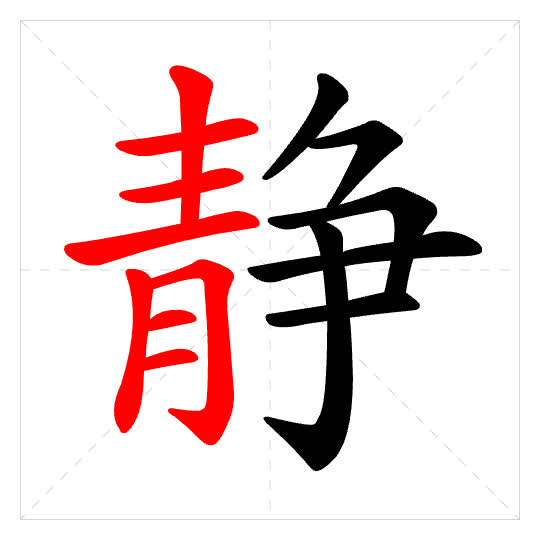
Basic Meaning
adj
Often used to describe physical objects, scenes, or states that are not moving, in contrast with "动". Can be used in the idiom 风平浪静.
still; motionless (opposite of "moving").
停止的,跟“动”相对。
Words:
Antonyms:
动噪
Sentences:
- 请保持这个姿势静止十秒钟。Please keep this pose still for ten seconds.
- 风平浪静的时候,湖面像一面镜子。When the wind is calm and the waves are still, the lake surface is like a mirror.
adj
Describes a lack of sound. Commonly used for environments, times of day, or people being quiet.
quiet; silent (opposite of "noisy").
没有声响(跟“闹”相对)。
Words:
寂静肃静更深夜静夜深人静很静
Antonyms:
闹
Sentences:
- 图书馆里需要保持安静。You need to keep quiet in the library.
- 夜深人静的时候,他最喜欢读书。In the quiet of the deep night, he likes to read the most.
Writing & Component
Radical青
Structureleft_right
Stroke Count14
Strokes一一丨一丨𠃌一一丿㇇𠃍一一亅