
远远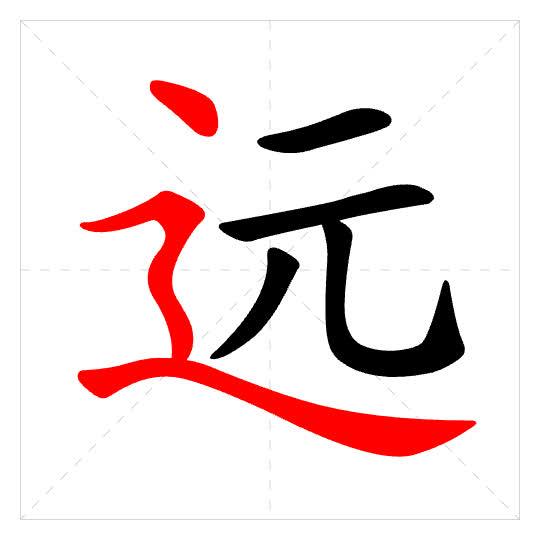
Basic Meaning
adj
Commonly used to describe physical distance or time, often with 处 or 方.
far; distant (in space or time, opposite of 'near')
空间或时间的距离长(跟“近”相对)。
Words:
远处远方远道而来远渡重洋山高路远
Synonyms:
Antonyms:
Sentences:
- 远处有一座山There is a mountain in the distance.
- 他来自远方He comes from afar.
- 那个城市离这里很远That city is very far from here.
adj
Used for relatives or relationships that are not close, e.g., 远亲.
distant (in kinship or relationship)
(血统)关系不密切。
Words:
远亲远房疏远远族远支
Synonyms:
疏
Antonyms:
近密
Sentences:
- 他是我的远亲He is my distant relative.
adj
Often used in comparisons to indicate a big gap, e.g., with 差得远 or 远远.
far (in degree of difference); by a large margin
差别的程度大。
Words:
差得远远远超过远远相差甚远远大
Sentences:
- 他的成绩差得远His grades are far behind.
- 这个价格远远超过我的预算This price far exceeds my budget.
v
Formal or literary usage, e.g., in 敬而远之.
to keep away from; to avoid (literary)
〈书〉不接近。
Words:
敬而远之
Antonyms:
Sentences:
- 他对那个问题敬而远之He keeps away from that issue respectfully.
adj
Formal or literary sense, describing abstract depth or complexity, e.g., 深远.
profound; deep (literary)
〈书〉深远;深奥。
Words:
深远远言远忧远旨奥远
Synonyms:
深奥
Sentences:
- 这本书的意义很深远The meaning of this book is very profound.
Writing & Component
Radical辶
Structuresemi_enclosed
Stroke Count7
Strokes一一丿乚丶㇋㇏