
走走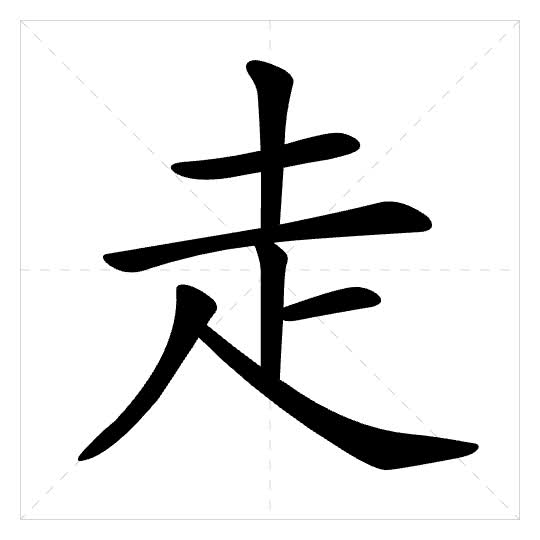
Basic Meaning
v
The most common modern meaning for moving on foot.
to walk
人或鸟兽的脚交互向前移动。
Words:
Synonyms:
Sentences:
- 我们走路去公园吧。Let's walk to the park.
- 他每天走得很快。He walks very fast every day.
- 宝宝正在学习行走。The baby is learning to walk.
v
Classical/literary meaning for 'to run', as seen in idioms like 奔走相告. Rare in modern daily speech with this meaning alone.
to run
〈书〉跑。
Words:
奔走相告走马观花奔走飞沙走石不胫而走
Synonyms:
Sentences:
- 好消息传来,大家奔走相告。Good news came, and everyone ran around telling each other.
v
Used for vehicles, ships, or pieces in a game (e.g., chess) moving.
to move; to operate
(车、船等)运行;移动;挪动。
Words:
走棋
Sentences:
- 这辆公交车十分钟走一趟。This bus runs once every ten minutes.
- 该你走棋了。It's your turn to move a piece (in chess/board game).
adj
Used as an adjective in compound words like 走红 (trending/becoming popular).
trending; showing a tendency
呈现某种趋势。
Words:
走红走热走高走低
Sentences:
- 这款产品最近在网络上走红。This product has recently become popular online.
- 天气热了,冰淇淋销量走高。As the weather gets hot, ice cream sales are trending upward.
v
A euphemistic term for death, respectful and indirect.
to pass away (euphemism)
婉辞。指人死。
Sentences:
- 老人昨天安详地走了。The elderly person passed away peacefully yesterday.
v
Specifically for visiting relatives or in-laws, as in 走亲戚.
to visit; to have social interactions
(亲戚)往来;交往。
Words:
走亲戚走娘家
Sentences:
- 春节期间,我们要走亲戚。During the Spring Festival, we visit relatives.
- 她经常走娘家。She often visits her parents' home (as a married woman).
v
Indicates passing through a place or via a route.
to pass through; via
通过,由。
Sentences:
- 我们走这条路去地铁站更近。It's closer to take this road to the subway station.
adj
Often used for information leaking (走漏) or speaking out of turn (说走了嘴).
leaking; divulging; going beyond bounds
透漏出,越过范围。
Words:
走气说走了嘴走风走漏消息
Sentences:
- 他不小心说走了嘴。He accidentally let something slip.
- 这个消息千万不能走漏。This news must not leak out.
v
Used for unintended discharges (走火) or other mishaps.
to go off accidentally; to occur due to a mistake
因失误而流失、发生。
Words:
走火
Sentences:
- 警察的枪不小心走火了。The police officer's gun accidentally went off.
v
When something changes so much it's no longer recognizable.
to lose its original form
失去原样。
Sentences:
- 这幅画颜色走得很厉害。The colors in this painting have faded/run badly.
- 这首歌被他唱走样了。This song was sung so differently by him that it lost its original style.
Writing & Component
Radical走
Structuretop_bottom
Stroke Count7
Strokes一丨一丨一丿㇏