
识识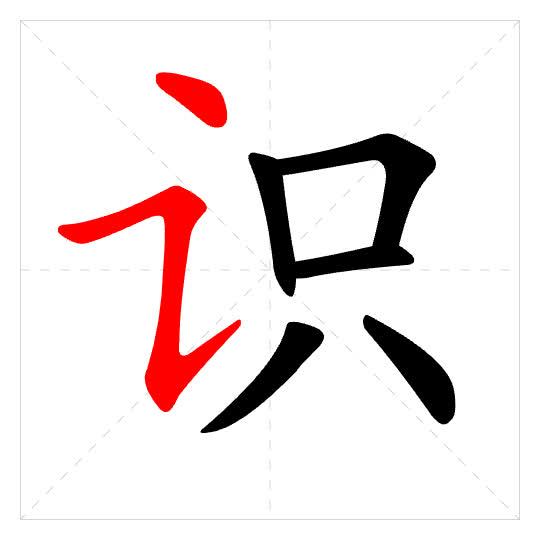
Basic Meaning
v
to know; to recognize; to be able to distinguish.
知道,认得,能辨别。
Words:
识货识字识别真假
Antonyms:
Sentences:
- 他从小就识很多字。He has known many characters since childhood.
- 你能识别出这幅画的真假吗?Can you tell whether this painting is genuine or fake?
- 她很识货,总能买到性价比高的东西。She has a good eye for quality and always buys things with high cost-performance.
n
Often used in compound words like 知识, 常识.
knowledge; learning; understanding.
所知道的道理;学问。
Words:
Antonyms:
愚
Sentences:
- 学习可以增长我们的知识。Studying can increase our knowledge.
- 具备基本的安全常识很重要。Having basic safety knowledge is very important.
- 他是一位有识之士,深受大家尊敬。He is a person of insight and is highly respected by everyone.
v
This sense overlaps with sense 1 but is more abstract, often used in literary or formal contexts. The anchor words provided seem to overlap with sense 2 (e.g., 常识, 学识) which are nouns, but the POS is 'v' and meaning is '知道;了解'. I'll focus on the verbal meaning. Note: The anchor words include '卓识' (which is a noun meaning insight) and '有识之识' (which might be a typo for '有识之士', a noun phrase). I'll base the examples on the meaning 'to know; to understand'.
to know; to understand.
知道;了解。
Words:
卓识有识之识常识学识不知好歹
Sentences:
- 他深识此中利害,所以格外小心。He deeply understands the stakes involved, so he is especially careful.
- 唯有识得大局,才能做出正确决定。Only by understanding the overall situation can one make the right decision.
Writing & Component
Radical讠
Structureleft_right
Stroke Count7
Strokes丶㇊丨𠃍一丿丶