
派派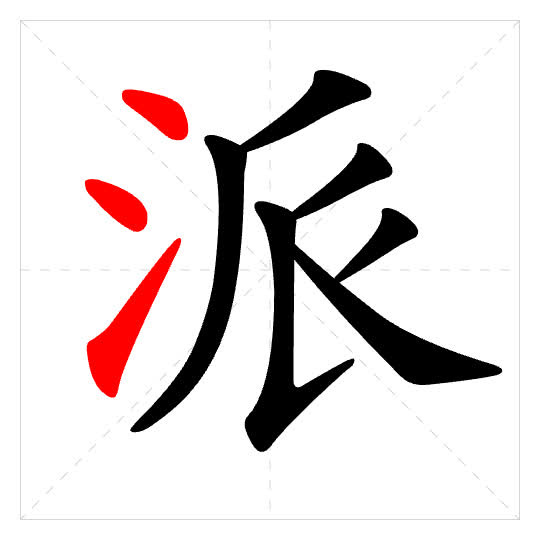
Basic Meaning
n
Often refers to formal or informal groups within politics, academia, or religion. Can be neutral (学派) or carry a negative connotation (宗派, 派系) when implying internal strife.
faction; school; sect; group sharing similar stances, views, or styles.
指立场、见解或作风、习气相同的一些人。
Words:
党派学派宗派派系教派
Synonyms:
Sentences:
- 他是这个文学派别的重要代表人物。He is an important representative figure of this literary school.
- 公司里不同派系之间竞争很激烈。The competition between different factions within the company is very intense.
n
Often used to describe a person's outward projection of attitude, elegance, or traditionalism.
style; manner; bearing; demeanor.
作风或风度。
Words:
派头老派气派正派
Sentences:
- 他今天穿得很有派头。He is dressed very stylishly/impressively today.
- 这位老先生作风很正派。This elderly gentleman has a very upright and honest character.
v
Typically used in formal or organizational contexts. The object is usually a person or personnel.
to assign; to dispatch; to send (on a mission).
分派;派遣;委派。
Words:
调派分派派购派任
Sentences:
- 公司派他去海外分公司工作。The company assigned/sent him to work at the overseas branch.
- 老师给每个小组分派了不同的任务。The teacher assigned different tasks to each group.
v
Often implies an obligatory or top-down distribution, as of duties, taxes, or supplies. The object is usually a task or material resource.
to apportion; to allocate (tasks, funds, quotas).
摊派,把钱款、任务等分派给有关人员、单位、地区承担。
Words:
派款派粮派饭派活
Synonyms:
摊分
Sentences:
- 上个月村里给我们家派了修路的活。Last month, the village allocated the task of road repair to our family.
v
Used in a negative sense, meaning to unreasonably blame or pick on someone.
to find fault with; to criticize.
指摘别人过失。
Words:
编派派不是
Sentences:
- 别总派他的不是,他也尽力了。Don't always find fault with him; he tried his best.
n
This is a loanword for the dessert 'pie'. Often preceded by the filling type.
pie (a type of Western dessert).
一种西式点心,用水果或肉做馅的馅饼。[英pie]
Words:
苹果派杨梅派草莓派蓝莓派巧克力派
Sentences:
- 晚餐的甜点是草莓派。The dessert for dinner is strawberry pie.
- 我最喜欢吃的派是苹果派。My favorite type of pie is apple pie.
q
The phrase is always "一派 + noun" (e.g., 一派生机). It gives a descriptive, vivid, and often positive or neutral sense of the whole scene.
a measure word indicating a stretch, expanse, or scene (of scenery, atmosphere, talk, etc.).
前边限用“一”字,用于景色、气象、语言等。
Words:
一派
Sentences:
- 春天到了,公园里一派生机勃勃的景象。Spring is here, and the park is full of vibrant, thriving life.
- 他说起话来总是一派胡言。Whenever he speaks, it's always a stream of nonsense.
Writing & Component
Radical氵
Structureleft_right
Stroke Count9
Strokes丶丶㇀丿丿丿𠄌丿㇏