
更更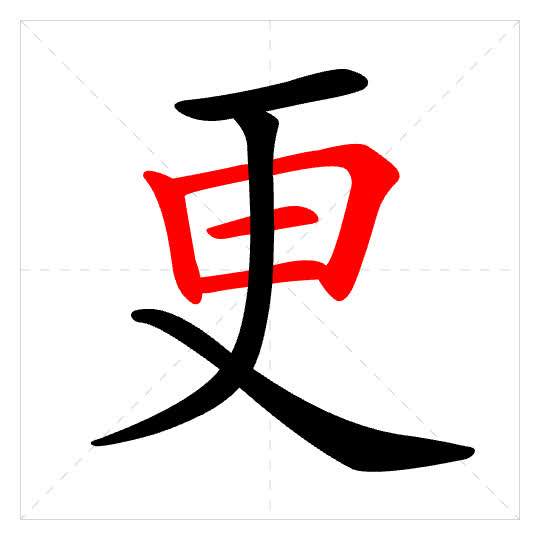
Basic Meaning
v
A formal or literary verb, often used in written contexts. Common in compound words like 更动, 更迭, 更换.
to change; to replace; to substitute
改变,改换;代替;替换。
Words:
更动更迭更换更正变更
Synonyms:
Sentences:
- 请把这张桌子和另一张更换一下。Please swap this table for another one.
- 公司最近变更了办公地址。The company recently changed its office address.
n
A classical noun. In modern Chinese, it is almost exclusively found in the idiom 少不更事.
experience; worldly wisdom (in a classical/literary context)
〈书〉经历;阅历。
Words:
少不更事
Sentences:
- 你不能怪他,他毕竟少不更事。You can't blame him; after all, he is young and inexperienced.
q
A classical measure word/time unit. Associated with historical/literary contexts.
watch (one of the five two-hour periods into which the night was divided in ancient times)
旧时一夜分成五更,每更大约两小时。
Words:
打更三更半夜五更寒
Sentences:
- 三更半夜,外面特别暗。In the middle of the night, it is especially dark outside.
- 在古代,有打更的人报时。In ancient times, there were night watchmen who announced the time.
Writing & Component
Radical曰
Structuresingle
Stroke Count7
Strokes一丨𠃍一一丿㇏