
搬搬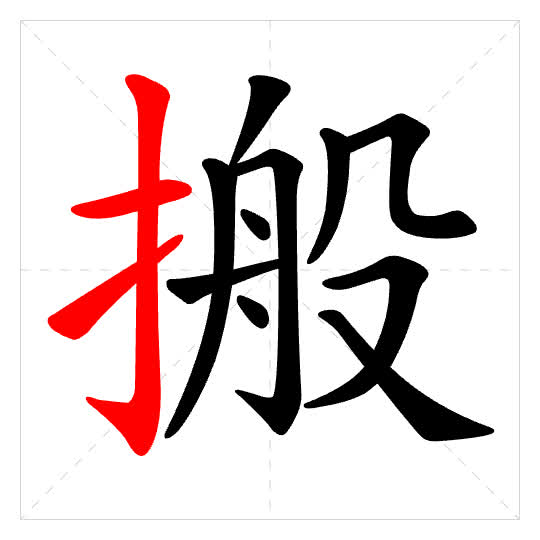
Basic Meaning
v
Often used for objects that are heavy, large, or require effort to move. It implies physical relocation of a tangible item.
to move, to carry, to relocate (heavy or bulky objects)
移动物体的位置(多指笨重的或较大的)。
Words:
搬运搬砖搬走搬开搬桌子
Synonyms:
迁
Sentences:
- 你能帮我把这张桌子搬到另一个房间吗?Can you help me move this table to another room?
- 他一个人就把这个很重的箱子搬上了楼。He carried this heavy box upstairs all by himself.
- 工人们正在搬运新的家具。The workers are moving the new furniture.
v
Primarily refers to changing one's living place (搬家) or the location of an organization. Contrasts with Sense 1 which is for objects; this sense is for the act of changing location yourself or with your belongings.
to move (residence or location), to relocate
迁移。
Words:
搬迁搬家
Sentences:
- 我们下个月就要搬家了,要搬到城市另一边。We're moving house next month, to the other side of the city.
- 因为公司搬迁,所有员工的办公地点都换了。Because the company relocated, all employees' office locations have changed.
v
Used figuratively to describe copying methods, rules, theories, etc., without adaptation to the new context. Often has a negative connotation of being unthinking or rigid. Key anchor words are 照搬 (copy exactly) and 生搬硬套 (apply mechanically).
to apply mechanically, to copy and use without change
照原样移用。
Words:
照搬搬用生搬硬套
Sentences:
- 学习外国经验不能只是照搬,必须结合本地情况。Learning from foreign experience cannot just be copying it exactly; it must be combined with local conditions.
- 他把网上的答案搬用到自己的作业里,被老师发现了。He copied and used an answer from the internet in his homework and was caught by the teacher.
Writing & Component
Radical扌
Structureleft_right
Stroke Count13
Strokes一亅㇀丿丿𠃌丶一丶丿㇍㇇㇏